
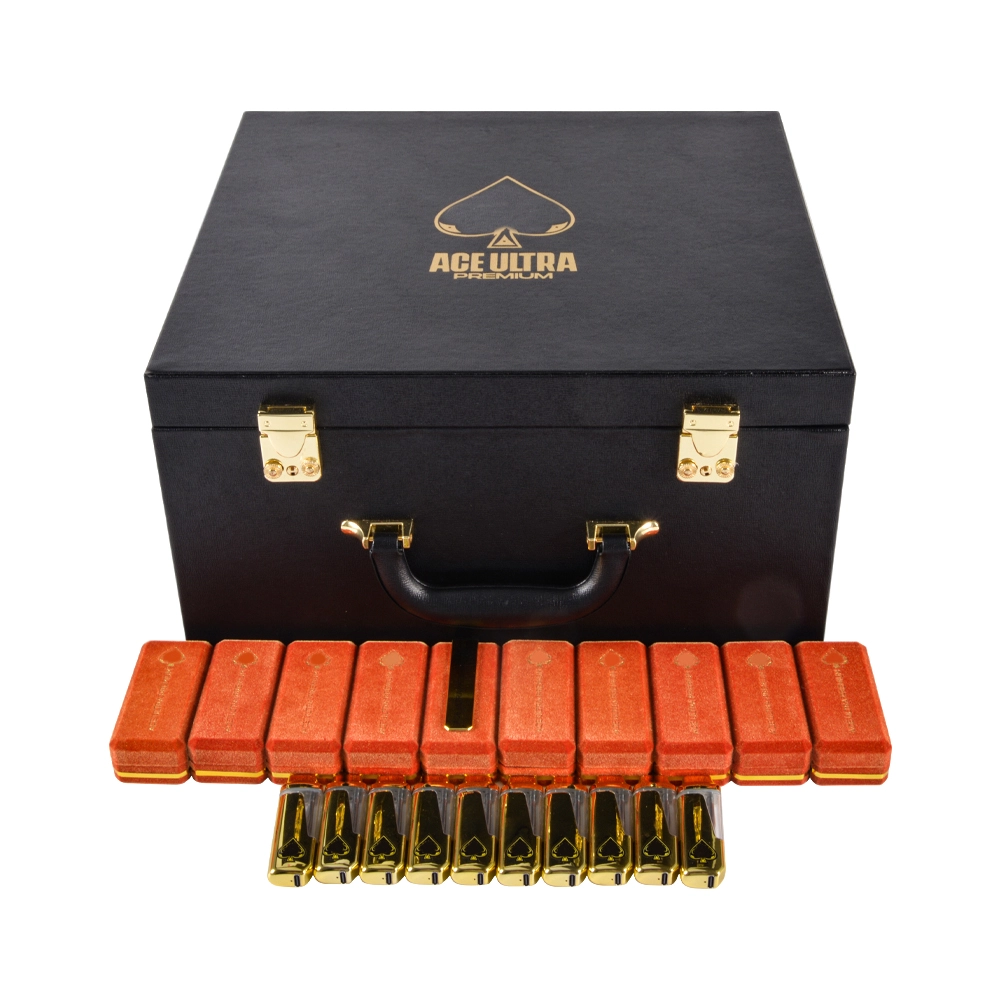
Executive Summary (Why B2B Buyers Care)
ACE-style disposables have surged because they combine high-viscosity compatibility, low leak rates, and brandable industrial design in a rechargeable, ready-to-fill platform. For B2B buyers, the stand-out value is not hype—it’s engineering and documentation:
-
Oil-path engineering that runs modern extracts (live resin/rosin/high-terp blends where legal) without cloggy user experience.
-
Battery and board protections consistent with current expectations for lithium devices and vape electronics.
-
Materials discipline to minimize heavy-metal migration and off-flavors.
-
Traceability (codes, labels, documentation) so your compliance team can sleep at night.
Everything below assumes empty hardware only and that filling, testing, and distribution are performed by licensed partners.
The ACE Advantage: Seven Pillars That Matter at Procurement
1) Oil-Path & Airflow Geometry (Clog-Resistant by Design)
ACE-style platforms earn their reputation with oversized, well-positioned intake ports, smooth internal channels, and ceramic heating elements tuned for thick oils. The result: faster saturation after fill, fewer dry hits, and more consistent vapor. Look for:
-
Intake count and diameter aligned to your viscosity targets.
-
Even heat distribution to reduce terpene scorching.
-
Stable draw resistance across batches.
2) Power System & Safety Layer (USB-C, Protections, Run-Time)
A legit 2 g-class shell demands a cell and board that reliably finish the tank under typical use. Expect:
-
USB-C rechargeability with over-charge, short-circuit, and over-discharge protections.
-
Output profiles designed to preserve terpenes (not just “max power”).
-
Optional preheat pulse modes that free condensed oil without burning.
3) Materials & Heavy-Metal Discipline (Taste & Testing)
ACE-style devices typically use ceramic cores, inert tanks, and food-contact-appropriate elastomers. On the B2B side, insist on:
-
Component declarations for all oil-contact parts.
-
Recent heavy-metal and materials safety reports at the assembled atomizer level (not just raw materials).
-
Stable flavor performance after thermal cycling.
4) Leak-Rate Control & Factory QC (Numbers, Not Slogans)
What separates premium hardware from commodity stock is process capability:
-
Air-tightness/vacuum tests on assemblies.
-
Environmental stress (cold/heat cycles, vibration/drop) to simulate shipping.
-
Clear targets for DOA/leak and documented CAPA (corrective action) when a lot drifts.
Pro tip: run your own pilot fills and hold the vendor to mutually agreed AQL thresholds before you scale.
5) Brandability Without Risk (Design Freedom, Legal Clarity)
ACE-style housings shine because they give you:
-
Large, clean print zones for legal text, batch IDs, and warnings.
-
Multiple finishes (matte, soft-touch, metallic accents) without contaminating taste.
-
A clear nominative boundary: the hardware provider delivers unfilled, unbranded shells; you control graphics, IP authorization, and labeling.
6) Traceability & Anti-Counterfeit (From Carton to Unit)
Serious buyers ask for:
-
Batch/lot codes on master cases and, ideally, discreet device identifiers.
-
Space for QR/serial labels to connect your own verification page and COAs post-fill.
-
Consistent color/finish standards so counterfeits are easier to spot.
7) Filling-Line Compatibility (Ops Wins)
ACE-style platforms are attractive to operations teams because they accommodate modern fill temps, measured headspace, and post-fill stand/soak practices that curb leaks. Ask for:
-
Recommended fill volume, temperature, cure/settle time.
-
Torque specs for any threaded components and gasket compression guidance.
-
Fixture tolerances for automated lines (nests, clamps, and nozzles).
Spec Snapshot (What You Should Expect From an ACE-Style Empty Device)
Illustrative targets—validate with the vendor’s current data and your own pilot runs.
-
Capacity: 2.0 mL class (with a clearly marked safe fill line).
-
Coil: advanced ceramic element; resistance typically around the 1 Ω neighborhood for thick oils.
-
Airflow: engineered for smooth, medium-resistance draw; options for subtle preheat/draw-activation.
-
Battery: rechargeable lithium cell sized to finish the tank under normal use; USB-C port; embedded protections.
-
Shell Options: multiple colors/finishes; mouthpiece ergonomics tuned for pocket carry and hygiene.
-
Tolerances: tight fit between tank, seals, mouthpiece to minimize headspace leaks and oxygen ingress.
Compliance & Safety: What “Authoritative” Looks Like in 2025
You don’t need a law library—just the discipline to ask for the right proof:
-
Battery transport testing summaries and clearly stated device safety design practices (covering charging, short-circuit, and thermal behavior).
-
Full panel expectations on the finished product after you fill (potency plus contaminants), performed by accredited labs per your jurisdiction’s rules.
-
Documentation pack you can drop into your SOPs: materials declarations, device spec sheets, test summaries, batch IDs, and packaging maps for labeling.
Remember: standards and rules vary by region and change over time. Your risk control is the paper trail plus consistent lot-level verification.
BOFU Playbook: How to Down-Select an ACE-Style Vendor (Empty Pod Only)
-
Scope Confirmation
Empty hardware only. No oil, no cannabinoids, no “pre-filled” offers. -
Technical Dossier
Exploded views, dimensions, intake specs, resistance range, recommended fill/cure. -
Safety Evidence
Battery/board protections, transport test summaries, materials/heavy-metal reports. -
QC & Reliability
Leak/DOA targets, in-factory test methods, environmental stress testing, RMA terms. -
Traceability
Batch coding at carton/device level, space for your QR/serial program. -
Ops Trial
Pilot fill: measure post-ship leakage, user experience, complaint rate, and returns. -
Scale Readiness
MOQs for standard vs custom, real lead times at 5k/10k/50k/100k+, stable mold management.
If a candidate is slow or vague on any step, they’re not a BOFU partner.
FAQ (For Procurement & QA Teams)
Q: What makes ACE-style empties outperform generic disposables?
A: Balanced intake/airflow for thick oils, ceramic heat management, tight tolerances, and documented safety/traceability. Together, those reduce clogs, leaks, and returns.
Q: How do we prevent burnt hits on terpene-rich oils?
A: Pair ceramic heating with sane output profiles and, if available, a gentle preheat. Validate with your actual formulation during pilot runs.
Q: What single document is non-negotiable?
A: A current technical + compliance packet: device specs, safety statements, and materials tests—plus your own post-fill COAs for each batch.
Q: Can we treat ACE branding as automatic authorization?
A: No. Treat vendor offerings as ACE-style empty hardware. You control IP authorization, graphics, and finished-goods compliance.
Bottom Line for B2B
ACE-style empty pods stand out because they are engineered for modern oils, built with protections and materials discipline, and packaged for traceability. The “hottest trend” is not a look—it’s a risk-managed platform that lets you deliver premium user experience while staying inside the guardrails of today’s safety and regulatory expectations.
Choose the partner who proves it with data, passes your pilot fill, and scales without shifting specs. That’s how ACE-style hardware stops being a trend—and becomes the backbone of your profitable, compliant product line.
Finally, if you wanna order empty vapes wholesale, could go to these pages:cbd vape pen,ace ultra premium 2ml ace ultra,aces disposable in bulk,ace red 2g wholesale,





0 Comments