
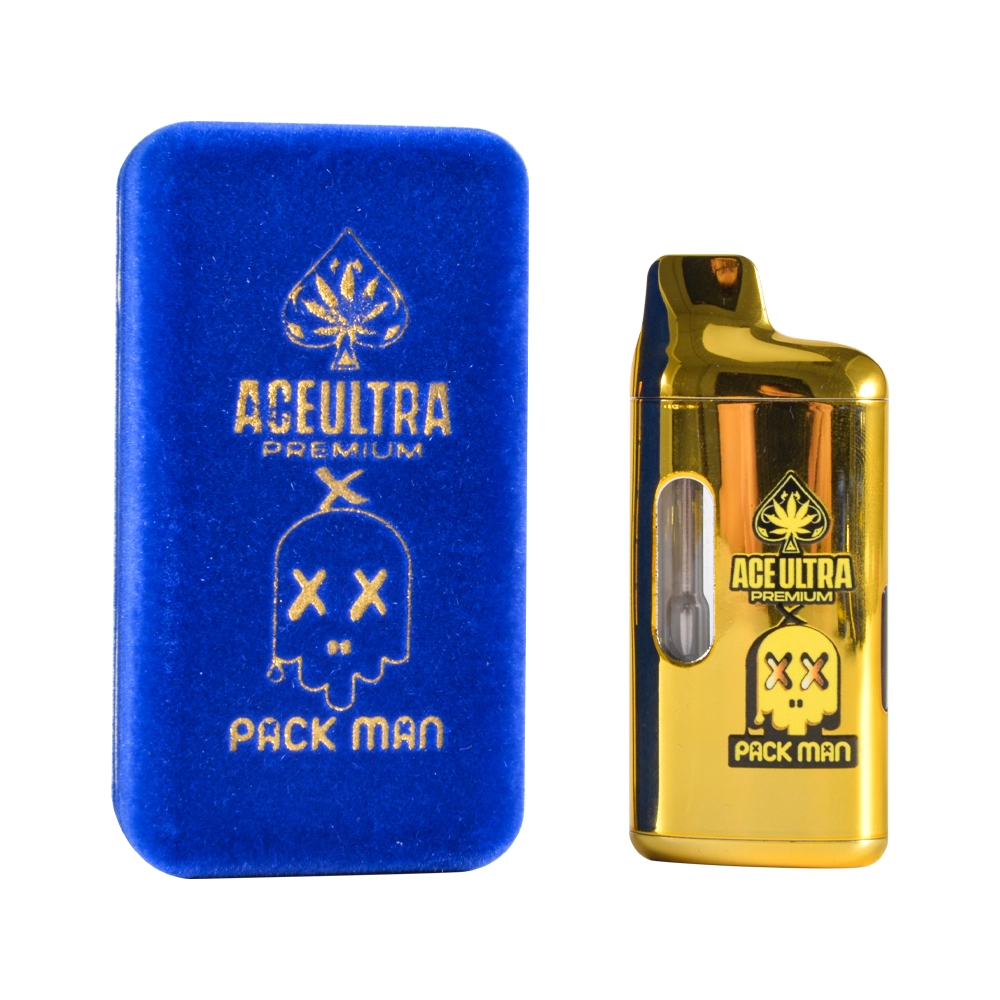
Bulk sourcing Ace Packman disposables is a straightforward way for B2B buyers to protect margin, speed time-to-shelf, and raise trust with customers. The winning formula is simple: source from authorized wholesale channels, verify authenticity at intake and at the counter, and align packaging with your state’s labeling rules. Add a light but consistent SOP, and you’ll reduce returns, pass inspections, and turn mid-funnel interest into repeat business.
Key Takeaways (what to remember before you buy)
-
Margin protection comes from volume tiers + fewer errors, not from gambling on the lowest quote. Buying in bulk through vetted channels lowers unit cost and reduces rework.
-
Authenticity is a visible ritual—“scratch · scan · match”—that your staff can demo in 30 seconds. It cuts “is it real?” returns and differentiates your store.
-
Compliance is operational, not legalese. Most states require specific outer-label elements (warnings, universal symbols, cannabinoid info, lot/batch IDs, dates, and minimum type sizes) that must be printed on the package. QR codes help with details but do not replace mandatory text.
-
COAs should come from competent labs. Prefer batch COAs issued by laboratories accredited to ISO/IEC 17025; this international standard indicates validated methods and quality systems.
Wholesale Overview: channels and choices that actually move
For MOFU buyers, the goal is to stock formats customers already recognize and support them with a repeatable verification flow.
Common product types
-
2 g disposables: convenience and runtime; ideal for travelers and “buy it and go” shoppers.
-
1 g / 2 g cartridges: pair with popular batteries; strong repeat-purchase behavior.
-
Flavor/strain rotations: maintain email/SMS engagement and give your loyalty tiers “first access.”
Channel guidance
-
Prioritize authorized wholesale or distributors who provide: batch traceability, per-lot COAs, and label proofs mapped to your state rules.
-
Ask for a quick verification demo before you commit: what does “pass” look like after scratch-and-scan? Which fields appear on the batch record?
Pricing Factors (no hype, just levers you control)
-
Volume tiers: larger orders lower landed cost and reduce replenishment overhead.
-
Assortment discipline: plan a 70/20/10 shelf mix—70% core movers, 20% rotational hype, ≤10% exploration—and rebalance after six weeks using sell-through by format/flavor.
-
Compliance speed: correctly labeled inventory goes to shelf immediately; every relabel or holdback erodes margin.
-
Ops fit: suppliers who pack consistently for your lanes (e.g., case counts, carton strength, inner packs) keep damage rates down and cash flowing.
Sourcing & Verification Process (the part that saves you money)
Step 1 — Pre-Check (before you request quotes)
-
Confirm internal licenses/records are current.
-
Prepare your state labeling checklist; print a one-pager for receiving.
-
Set your intake SOP: Receive → Verify → Label Check → Archive → Shelf.
Step 2 — Supplier Vetting (copy/paste this ask)
-
Traceability: “Explain how lot numbers map from master case to unit.”
-
COA: “Provide a COA for the batch; confirm the testing lab’s ISO/IEC 17025 accreditation.”
-
Labels: “Share label proofs mapped to my state’s outer-panel requirements.”
-
Verification: “Show the ‘scratch · scan · match’ pass screen.”
-
Recourse: “What happens if a state advisory or label correction is issued?”
Step 3 — Authenticity SOP (trainable in 30 seconds)
-
Sticker check: confirm the authenticity sticker is intact and unique.
-
Scratch + scan: reveal the code and scan the QR to open the verification view.
-
Match + show: confirm the code and display the batch details or COA summary.
Post a small POS card reading “Scratch · Scan · Match · COA on file.”
Step 4 — COA & Lab Standards (what “good” looks like)
-
Must match: lot/batch IDs on COA = your cartons and unit labels.
-
Dates present: collection and test dates are listed and recent.
-
Panels covered: potency plus safety panels (commonly heavy metals, residual solvents, microbials) that align with your state.
-
Competence: COA issued by a lab accredited to ISO/IEC 17025 (signals validated methods, calibrated instruments, and audited quality systems).
Step 5 — State Labeling Compliance (pass inspection the first time)
Across states, recurring themes include:
-
Outer-panel printing is mandatory. Required statements belong on the package, not only behind a QR.
-
Minimum type sizes matter. Too-small warnings are a common reason inventory is held.
-
Lot traceability: carton and unit IDs must tie back to the COA.
-
Child-resistant and opaque packaging (where applicable): keep supplier attestations on file.
Create a label proof map for each SKU that marks where warnings, symbols, content statements, and batch IDs appear and notes type sizes.
Step 6 — Receiving & Stocking (make the SOP visible)
-
Receive: scan master cases; record lots; sample at least two units per lot.
-
Verify: perform the scratch-scan-match flow; confirm a pass screen.
-
Label check: compare against your state’s checklist.
-
Archive: save the COA (digital + printed) and keep the lab’s accreditation documentation with it.
-
Shelf: only verified, label-correct units go out. Quarantine exceptions for supplier resolution.
Step 7 — Risk Control (because advisories happen)
-
Monitor regulator advisories; if one impacts your lot, quarantine immediately.
-
Maintain response templates for staff/customer notices.
-
Keep a COA binder for the last several months of lots; many inspectors appreciate paper at hand even if you also maintain digital files.
Quick Reference Tables
Supplier Vetting Checklist
| Item | What you want to see |
|---|---|
| Batch COA | Matches lot on cartons/units; recent test dates; potency + safety panels |
| Lab competence | ISO/IEC 17025 accreditation referenced on documentation |
| Label proof | Outer-panel warnings/symbols/content, type sizes, batch IDs marked |
| Verification flow | Scratch-and-scan pass screen; code match behavior |
| Recourse | Clear process for advisories, label corrections, and replacements |
COA Hygiene (60-second scan)
| Field | Check |
|---|---|
| Lot/Batch ID | Matches your cartons/units |
| Dates | Collection and test dates present/recent |
| Panels | Potency + safety panels required in your state |
| Accreditation | Lab notes ISO/IEC 17025 accreditation |
| Signature/trace | Authorized sign-off or digital signature trail |
7-Day Action Plan (turn MOFU into operations)
Day 1–2: Train every associate on the 30-second authenticity demo; place a POS card (“Scratch · Scan · Match · COA on file”).
Day 3: Audit your top 20 SKUs against your state’s outer-label checklist; fix gaps before the next order.
Day 4: Request and archive COAs for current lots (digital + printed) and keep proof of ISO/IEC 17025 accreditation with them.
Day 5: Add a POS product flag like “Batch Verified / COA on File.”
Day 6: Re-merchandise to a 70/20/10 shelf mix; plan a loyalty push around verified new drops.
Day 7: Schedule quarterly label audits and assign an owner to track regulatory updates and integrate them into your SOP.
FAQ
How do I check if Ace Packman disposables are authentic?
Use the authenticity sticker: scratch to reveal, scan the QR, and match the code. Then open the batch details or COA summary and confirm that the lot matches your box and unit.
What documents should I ask for before buying in bulk?
Request the batch COA, label proofs mapped to your state’s required statements, and documentation that the testing lab is accredited to ISO/IEC 17025. Keep everything archived by brand → SKU → lot.
Can I rely on QR codes for compliance?
No. QR is excellent for transparency, but most states require certain statements to be printed on the outer label in specified sizes. Treat QR as a supplement—not a substitute.
Bottom Line
Bulk sourcing Ace Packman disposables works when you sell proof, not promises: visible verification at the counter, batch COAs from competent labs, and packaging that meets your state’s labeling rules. Lock those practices into your intake SOP and you’ll see cleaner audits, faster turns, and fewer returns—exactly what a MOFU buyer needs to say “yes” with confidence.



0 Comments