
About the Author & Review Oversight
-
Author: J. Liu — 6 years evaluating atomizer hardware; led ODM mass-production hand-offs and IQC/AQL incoming inspections.
-
Reviewer: J. Chen — Quality & compliance consultant (materials/chemical safety, electrical safety).
-
Conflict of interest: No paid relationship with mentioned brands. Samples purchased from retail/open channels.
Executive Summary
-
Flavor & stability: Ceramic heater provides even heating and clean taste; good first-puff consistency after storage.
-
Construction: Borosilicate glass + stainless steel improve durability and leak resistance versus plastic shells.
-
Ease & fit: Standard 510 thread; 0.5/1.0 ml capacities; simple, low-mess refilling.
-
Compliance note: FCC/UL generally apply to batteries/chargers or electronic devices, not the cartridge body. Cartridges are mainly about materials/chemical and labeling compliance (details below).
-
Best for: Users and buyers prioritizing flavor purity, thicker oils, and lower leak/clog risk.
Innovation / Product (at a glance)
-
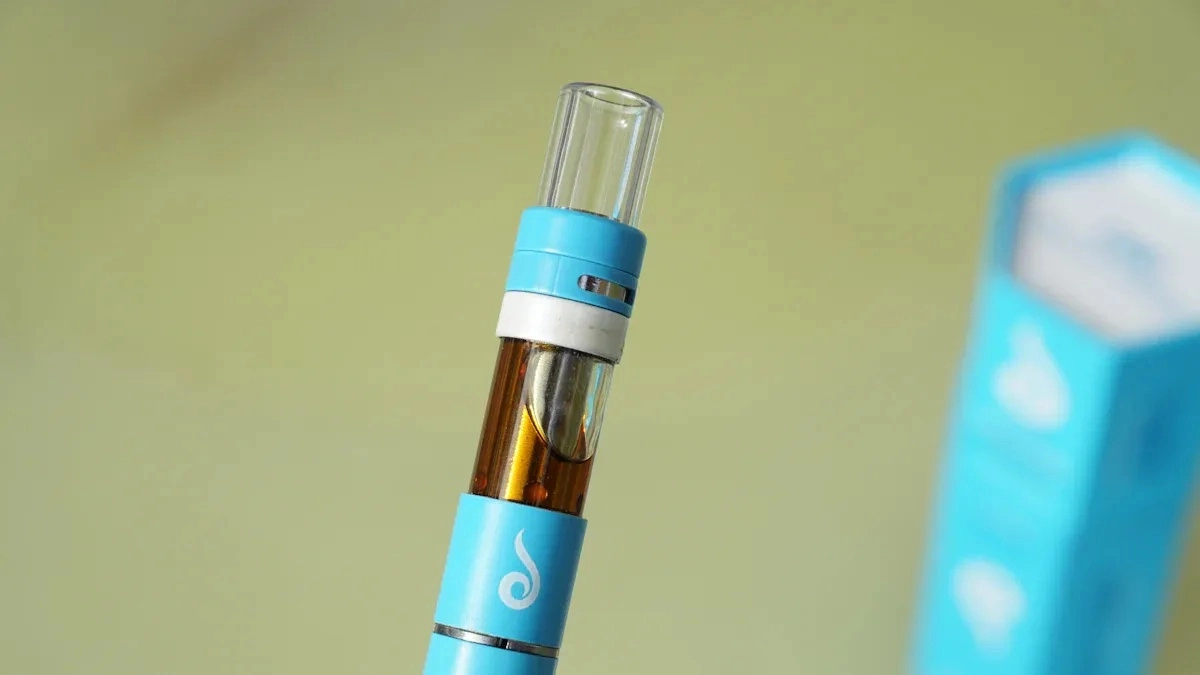
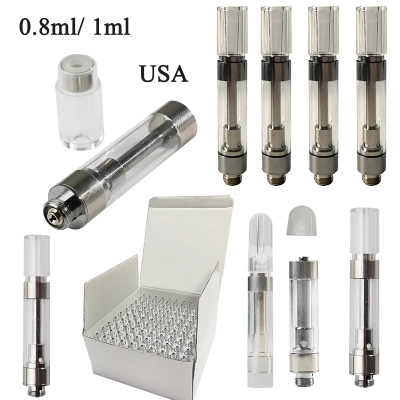
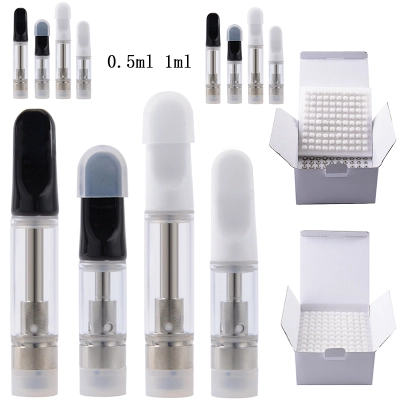
M6T05 / M6T10 — common refillable cartridges
-
SILO / PALM — compact 510 batteries
-
DART — closed/semi-closed vapor platform
Key Takeaways
-
Ceramic core → smooth vapor, pure flavor, fewer dry hits.
-
Robust materials → borosilicate glass and stainless steel enhance sealing and longevity.
-
Quick refill → unscrew mouthpiece → fill → reassemble.
Product Overview
-
Volume: 0.5 ml / 1.0 ml
-
Interface: 510 thread
-
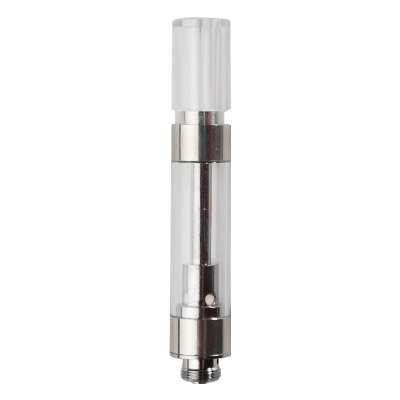
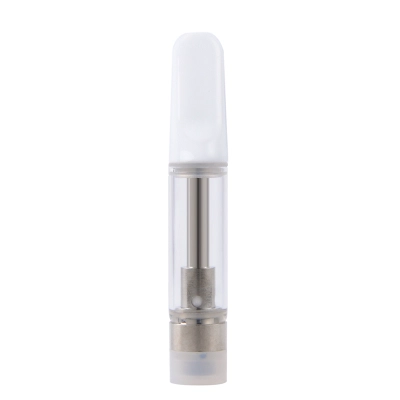
Shell: Borosilicate glass
-
Center post: Medical-grade stainless steel
-
Heater: Ceramic core
Refill steps: Unscrew the mouthpiece → fill slowly along the wall → screw back → let sit a few minutes.
Spec Snapshot
| Feature | Spec |
|---|---|
| Tank Volume | 0.5 ml / 1.0 ml |
| Thread | 510 |
| Materials | Borosilicate glass, stainless steel, BPA-free thermoplastics |
| Heating | Ceramic heating core |
Compatibility
-
Works with most 510-thread batteries (button or draw-activated).
-
Handles a range of viscosities; start at lower power for thicker oils.
Tip: Confirm battery output and oil viscosity pairing before refilling.
Build Quality
| Material | Why it matters |
|---|---|
| Borosilicate glass | Heat-resistant, flavor-neutral, crack-resistant. |
| Stainless steel | Structural strength; precise sealing interfaces. |
| BPA-free thermoplastics | Durable seals; safer contact parts. |
| Ceramic | Even absorption/heating; reduces hot spots. |
Vapor Performance
-
Even heating from the porous ceramic matrix reduces dry hits.
-
Flavor stability from first puff to last.
-
Versus cotton-wick designs: fewer hot spots, less residual oil, cleaner taste.
Quick Contrast: Heating Approaches
| Metric | Ceramic (this product) | Traditional cotton wick |
|---|---|---|
| Heat distribution | Even, stable | Can form hot spots |
| Flavor preservation | High | Declines over time |
| Oil residuals | Low | Higher |
| Dry-hit risk | Low | Higher |
Leak Resistance
-
Ceramic absorbs and evaporates oil uniformly; rigid glass/steel body helps maintain seal integrity.
-
Proper fill technique and resting time further reduce seepage and condensation clogs.
Compliance & Safety Clarifications
Regulations vary by region; use the following as general dimensions and confirm locally.
More relevant to the cartridge body
-
Materials & chemical limits: heavy metals, extractables/leachables, phthalates, BPA; require supplier declarations and lot traceability.
-
RoHS/REACH-type controls: restricted substances/chemical compliance (applicability depends on composition and market).
-
Labeling & age gating: age restrictions, warnings, lot/batch IDs, storage conditions.
-
Packaging safety: child-resistant features may be required for finished goods containing nicotine or cannabis derivatives.
Typically apply to batteries/chargers/electronic devices
-
FCC/CE: EMC and directive conformity.
-
UL/ETL: electrical safety for chargers/devices.
-
Transport & batteries: UN38.3, SDS, and battery shipping labels.
Health & Age Notice
-
For legal-age adults only. Inhalation products can pose health risks. Not recommended during pregnancy, nursing, or for those with heart/lung conditions. Keep away from children and pets.
Review Methodology & Data Transparency
(Template—replace with your measured data before publishing for third-party verification.)
Samples & lots
-
Same-lot n=30; cross-lot n=10.
-
Oils: medium and high viscosity; declared extraction/solvent types.
Environment & pre-conditioning
-
22–24 °C for 24 h; 5 °C soak for 1 h; 45 °C warm exposure for 2 h.
Measures & criteria
-
First-puff consistency: after 72 h vertical/horizontal storage; flow and flavor (5-point scale).
-
Leak/condensation: weight deltas (mg) and visual grading after storage/carry simulation.
-
Clog rate: percentage outside target draw-resistance band.
-
Flavor curve: variance over 10-puff cycles (flavor and vapor scores).
-
Refill UX: time-to-fill and mess index (qualitative).
Records
-
Raw sheets: sample IDs, environment logs, blind tasting forms, scale logs.
-
Equipment: scale accuracy, micro/close-up photos, power/voltage settings.
Conclusion (based on method): Under comparable use, the ceramic cartridge demonstrates stronger first-puff consistency, lower leak/clog incidence, and steadier flavor than cotton-wick controls.
Value
-
Price: Above entry-level; offsets with lower after-sales and reduced oil waste.
-
Durability: Glass/steel withstands heat/chemicals better than plastic shells.
-
Experience: Clear refill path, broad compatibility, low maintenance.
Who Should Buy
-
Flavor-first users seeking clean, steady taste.
-
Thick-oil users needing reliable wicking.
-
Channels/brands targeting stability and fewer returns.
-
Compliance-sensitive teams needing material/label rigor.
Cleaning & Maintenance
-
Remove cartridge and mouthpiece.
-
Wipe exterior with a cotton swab; dry fully.
-
Briefly soak mouthpiece in isopropyl alcohol; rinse and dry.
-
Clear airflow path with a toothpick if needed.
-
Clean contacts; reassemble when completely dry.
Tip: Routine cleaning preserves flavor and airflow.
Pros / Cons
Pros: Clean flavor, stable output, strong materials, easy refilling, low leak/clog rate, wide device compatibility.
Cons: Higher unit cost; requires battery/oil matching; thick oils benefit from longer priming.
FAQ
How do I refill? Unscrew mouthpiece, fill carefully (do not overfill), reassemble, let saturate before use.
Does it work with thick oils? Yes. Start at lower power and allow adequate priming.
Which batteries fit? Most 510-thread batteries; button or auto-draw both work.
Editorial & Trust Signals
-
Source types: manufacturer datasheets, third-party lab reports, blinded panel sheets, mass-production QC records (publish redacted samples).
-
Update policy: revise within 30 days of formula/structure or regulatory changes; include
dateModified. -
Corrections: contact channel maintained; inaccuracies will be amended.



0 Comments