
Why This Comparison Matters
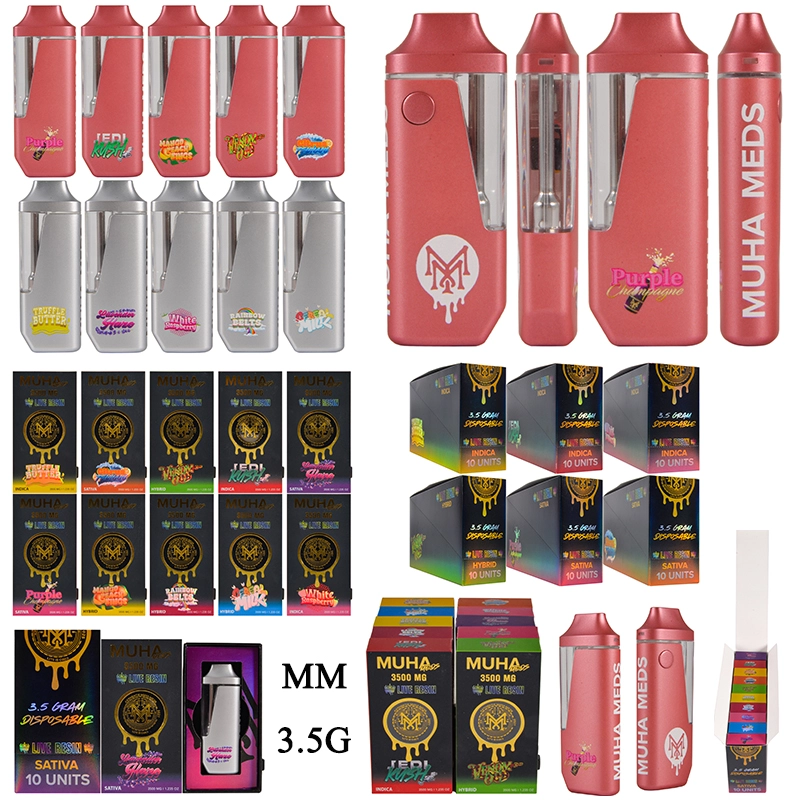
At mid-funnel, category managers aren’t choosing by hype; you’re choosing the chassis that finishes tanks, ships clean, and minimizes service load. The two most bankable footprints are 1G (1.0 mL) and 2G (2.0 mL) bar-style empty pods. The right pick depends on runtime, leak discipline, and downstream returns—all of which are driven by intake geometry, ceramic behavior, seal stack, and battery/output tuning.
Scope & Test Lens
-
Products: single-chamber Muha-style 1G and 2G empty disposables.
-
Engineering constants to hold: advanced ceramic core (tight resistance window ~1.0 Ω), multi-port intakes sized for viscous fills, USB-C cell with protections (short-circuit/over-charge/over-discharge), repeatable mouthpiece torque and clean welds.
-
What we evaluate: first-minute performance, post-transit leak rate, runtime sufficiency, week-one clog interventions, DOA, and 30-day return ratio.
Treat the numbers below as 2025 acceptance bands/targets used by well-run B2B pilots, not marketing promises.
Quick Outcome Table (Targets & Typical Ranges)
| KPI (1-week pilot + 30-day follow) | 1G Empty Pod | 2G Empty Pod | Why It Differs |
|---|---|---|---|
| First-10-puff success | ≥95% target (typ. 95–98%) | ≥95% target (typ. 94–97%) | 2G needs slightly longer wet-out if cure is rushed |
| Post-transit leak rate (per 100) | ≤0.8 target (typ. 0.3–0.8) | ≤1.0 target (typ. 0.5–1.2) | Larger headspace + more freight stress |
| Runtime to near-empty (top-ups) | 0–1 | 1–2 | 2G volume needs more recharges at conservative output |
| Week-one clog interventions | ≤1.5% | ≤2.0% | Longer lifecycle → more late-tank condensation events |
| DOA / early failure | ≤0.5% | ≤0.5% | Similar if port/PCB and torque are controlled |
| 30-day return ratio | 0.9–1.3% | 1.1–1.6% | More volume → more chances to expose drift |
Engineering Drivers Behind the Numbers
-
Intake geometry: Effective intake area (e.g., cumulative equivalent of ~4×1.5–1.6 mm ports) and port height above tank floor determine flood vs starvation. 2G designs must keep channels short/smooth to avoid back-pressure at scale.
-
Ceramic/output curve: A narrow resistance window around ~1.0 Ω spreads heat evenly; a conservative output curve protects late-tank flavor and avoids scorch—especially critical for 2G.
-
Seal stack: Gasket compression + clean ultrasonic welds + repeatable mouthpiece torque reduce headspace weep during heat↔cold shipping. Tolerance drift shows up as 2G leaks first.
-
Battery/runtime: Right-sized cell with USB-C and protections should realistically finish the reservoir. Aggressive voltage “fixes” runtime on paper but raises returns via scorch/overheat.
When to Deploy 1G vs 2G
Choose 1G when:
-
You need lowest return friction and the smoothest first-minute success.
-
Your planogram favors more SKUs / lower ticket per unit.
-
You’re onboarding new teams and want the simplest training script.
Choose 2G when:
-
Your customers prize fewer charge cycles per mL of oil overall.
-
Freight economics reward fewer cartons and larger reservoirs.
-
You have strong control of fill → cure → torque and can hold AQLs.
Pilot Method (A/B, One Week, Go/No-Go)
-
Bench: verify intake count/diameter/placement, resistance window, torque, weld quality, USB-C port retention.
-
Pilot fill: 300–500 units per size; follow the vendor’s safe-fill line, headspace target, and soak/cure window precisely.
-
Stress ship: thermal cycling (cold↔heat), vibration, and drop to mirror your lanes.
-
Track five KPIs: leak rate, first-10-puff success, runtime to near-empty (top-ups), week-one clogs, DOA.
-
Decision gate: approve only if the candidate meets or beats your control on all five.
Documentation & Compliance (Don’t Skip)
-
Exploded views & dimensions with intake map and resistance window
-
Filling SOP (temperature, safe-fill, headspace, soak/cure)
-
Device/battery safety statement + lithium transport test summary for the exact cell/pack
-
Assembled-unit materials/heavy-metal results for oil-contact parts
-
QC regimen: pressure/air-tightness on finished assemblies; thermal/vibration/drop; AQLs + RMA/CAPA
-
Packaging map: reserved warning zones, batch/lot IDs, serialization
Procurement Signals (What Predicts Low Returns)
-
Stable draw feel and low audio turbulence across lots
-
Color/finish tolerance sheets matched to golden samples
-
PSI sampling from transport-ready cartons (not showroom pieces)
-
ERP-ready labels with scannable lot/batch codes
Practical Takeaway
If your stores are early in category maturity, 1G typically wins on first-minute success and returns. If your ops can enforce fill/cure/torque and you want fewer shipments and higher ticket devices, 2G wins—provided it proves leak discipline, runtime sufficiency, and late-tank stability in your pilot. Lock the spec that hits your five KPIs, then freeze molds/BOM so month-12 feels like month-1.
If you wanna know more details, pls go to these pages: wholesale muha meds, custom muha meds disposable, muha meds disposables 2 gram.



0 Comments