
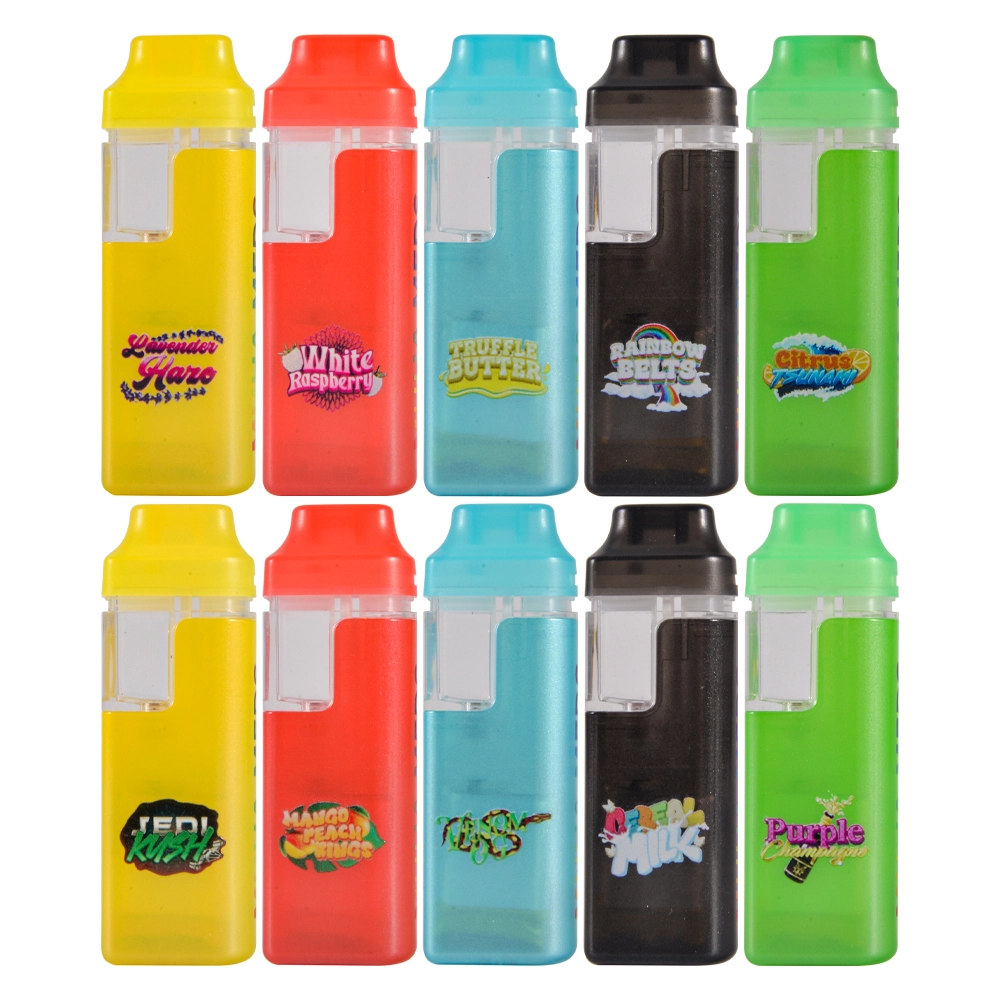
Everyone selling Muha-style 2G disposables talks about “runtime,” but very few teams actually show the math behind it. For B2B buyers of empty hardware, runtime is more than a puff-count marketing line; it’s the result of how battery capacity and output curve are balanced inside the device. Get this balance wrong and you end up with angry customers saying “it dropped off fast” or “dead before it should be.”
This article stays focused on hardware only: battery, coil, and control behavior inside a Muha 2G empty device. No oil, THC, or nicotine—just the energy budget and how to use it.
What We Mean by Runtime in Muha 2G Hardware
At a hardware level, runtime is:
How long the device can deliver usable output before voltage sag and protections make the experience unacceptable.
For a Muha 2G disposable, that usually translates into three user-visible phases:
-
Stable phase – hits feel consistent; power stays near target.
-
Soft decline – slight reduction in intensity, still acceptable.
-
End-of-life – protections trigger more often; hits feel weak or the device stops.
Your goal as a B2B buyer is to get as much time as possible in the stable phase, and to make the transition into decline predictable rather than random.
Battery Capacity: The Starting Budget
Capacity is usually expressed in mAh. At a fixed voltage, more mAh means more total energy. But runtime is not just “bigger number = better”:
-
Larger cells increase weight and size, affecting ergonomics.
-
Oversized batteries can run into transport and classification complications.
-
Very high capacity relative to the reservoir can create mismatch: lots of battery left when the jar or tank is already empty.
For Muha 2G-class devices, you typically see compact lithium cells sized to deliver enough energy for the intended number of sessions without overbuilding.
Output Curve: How Power Is Delivered Over Time
The output curve describes how the device drives the coil as the battery discharges:
-
Some designs use simple direct-drive behavior (power falls with voltage).
-
Others add basic regulation, trying to keep output more constant until the cell reaches a cutoff.
-
More advanced boards can shape the curve—soft start, plateau, then a sharp cut-off.
The curve you choose matters because the coil sees:
-
Higher or lower average power per puff.
-
Different thermal profiles over a session.
-
Different stress on the battery (which affects lifetime and safety margin).
The Trade-Off: High Output vs Long Runtime
From a hardware standpoint, runtime is roughly:
Runtime ≈ (Battery Capacity × Average Voltage × Efficiency) ÷ Average Power Demand
If you push a high power level (strong, intense output):
-
The average power demand per puff increases.
-
The cell voltage sags faster under load.
-
The time spent in the stable phase shrinks.
If you set a moderate power level:
-
The output curve stays flatter for longer.
-
The device may feel less aggressive but lasts more consistent sessions.
-
You can size the cell more reasonably without compromising experience.
For B2B buyers, the right setting depends on market expectations. Some markets value “smooth and long-lasting,” others want “strong and punchy” even if runtime drops.
Designing a Muha 2G Runtime Spec
Instead of vague promises, you can define runtime as a combination of:
-
Target power band – for example, a certain watt range corresponding to a resistance band and voltage behavior.
-
Minimum stable runtime – a target duration (or measured session count) under controlled conditions.
-
End-of-life point – the point where you consider the device no longer acceptable (draw too weak, too many cutoffs).
This becomes part of your hardware spec:
-
Coil resistance range (with tolerances).
-
Supply strategy (direct vs regulated).
-
Battery capacity and allowed cell models.
-
Protection thresholds (undervoltage cut-off, current limits, temperature if present).
Incoming and Pilot Checks for Runtime Behavior
As a buyer, you can’t wait for field complaints to discover runtime problems. Even in an empty-hardware phase, you can check:
-
Resistance distribution – tight control around the target avoids huge power variance.
-
No-load battery voltage and protection behavior – confirm boards cut off where they are supposed to.
-
Simple runtime simulations using test loads or controlled work cycles to compare lots.
You don’t have to reproduce exact usage patterns, but you should be able to compare Lot A vs Lot B and see if one consistently drops power earlier than the other. Large differences hint at uncontrolled components or design drift.
Balancing Runtime and Form Factor
Muha 2G devices live in a specific ergonomic niche—compact, but with enough mass to feel substantial. When choosing a runtime profile:
-
Oversizing the cell for extreme runtime may make the device heavy or bulky.
-
Undersizing the cell to keep it ultra-light can lead to disproportionate complaints.
-
A well-balanced design gives enough sessions for a normal user while still fitting comfortably in hand.
Your job as a B2B buyer is to decide where that balance should land in your price and market segment, then make runtime math part of the RFQ, not an afterthought.
Turning Runtime from a Guess into a Specification
Too many runtime promises are made on gut feeling and marketing language. For Muha 2G empty hardware, you can do better by:
-
Defining a clear output curve strategy (intensity vs duration).
-
Specifying a coil resistance band and verifying it lot by lot.
-
Selecting battery capacities that make sense for your target sessions, not just the biggest number.
-
Running simple incoming checks and pilot tests to confirm behavior before you scale.
When you do this, runtime stops being a vague hope and becomes part of your engineered offer: a Muha 2G platform that behaves the way you promised it would, across lots, warehouses, and months on the market.
If you wanna know more details, pls go to these pages: wholesale muha meds, custom muha meds disposable, muha meds disposables 2 gram.













0 Comments