
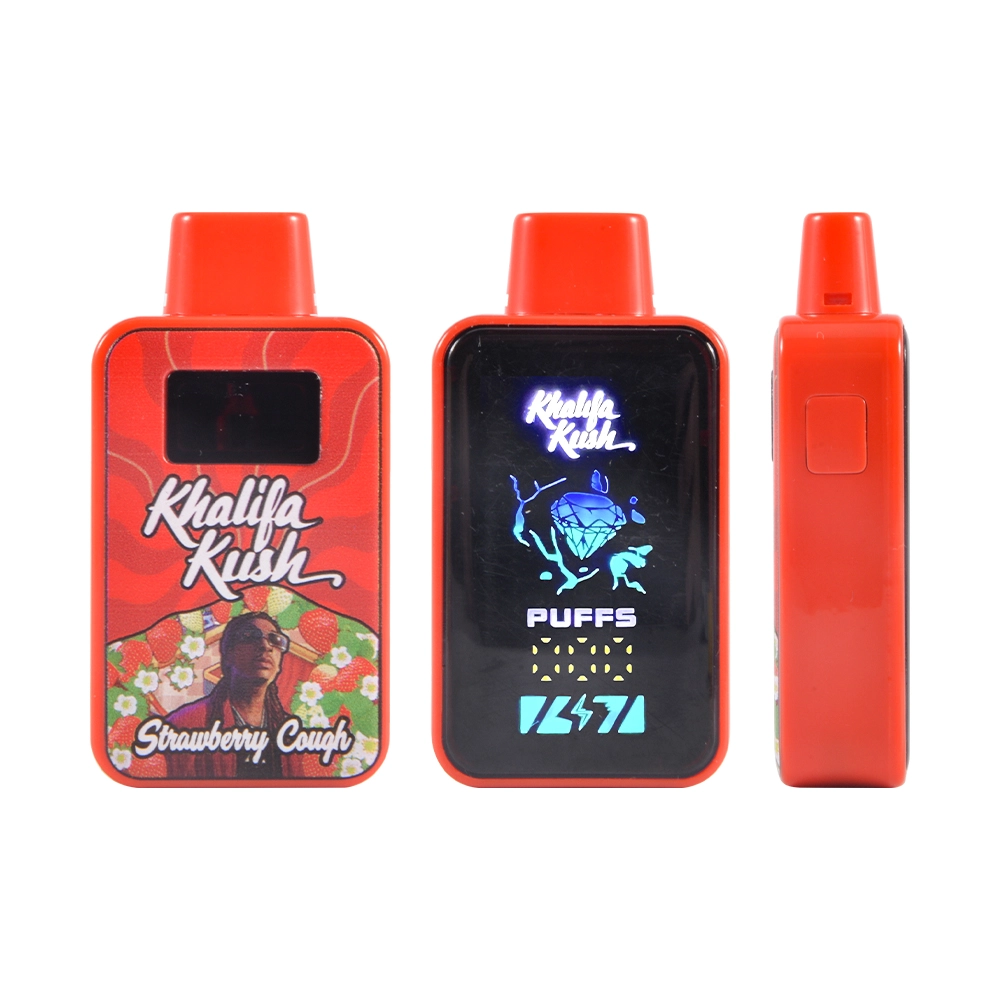
You make B2B buying easier with Khalifa Kush 2ml vapes (hardware-only) by standardizing around a single 2ml format that simplifies procurement, inventory control, and quality inspection. A consistent 2ml capacity reduces capacity-based SKU sprawl, keeps RFQs and spec sheets clean, and makes receiving/QC repeatable across batches. On the commercial side, Khalifa Kush carries premium brand recognition in the broader market (often associated with Wiz Khalifa branding and a proprietary strain identity), which can support shelf appeal and sell-through—while your program stays focused on reliable, market-ready empty hardware. In EU/UK nicotine-vape channels, 2ml is widely used as the capacity cap for tanks/pods/cartridges, making a 2ml hardware baseline a practical choice for compliance-oriented planning (always confirm the exact requirements for your market and product category).
Key Takeaways
-
Khalifa Kush 2ml vapes make stock management easier. A single 2ml capacity reduces SKU count, keeps catalogs tidy, and lowers picking/reorder mistakes.
-
2ml aligns with common EU/UK nicotine-vape capacity limits. Standardizing on 2ml supports compliance-ready product planning where those frameworks apply.
-
Repeatable QC reduces returns and complaints. A fixed checklist (seals, airflow consistency, finish, packaging) catches defects early and protects margins.
2ml Standard and B2B Value
SKU Management Benefits
Choosing one 2ml size across a disposable-hardware program makes inventory easier because “capacity” stops multiplying your catalog. Instead of managing separate capacity variants with slightly different failure modes and documentation, you run one core spec sheet and one receiving checklist. That reduces training time for warehouse teams, simplifies new-product onboarding, and improves data cleanliness across ERP, spreadsheets, and marketplace listings.
With Khalifa Kush 2ml vapes, you can differentiate by finish, packaging, labeling layout, and bundle configuration instead of capacity. That also helps forecasting: your demand signals are less fragmented, reorder points are clearer, and sales teams have fewer near-duplicate SKUs to explain. In practice, fewer SKUs means fewer mis-shipments, fewer returns caused by “wrong item received,” and faster cycle counts.
Tip: Treat 2ml as a “platform” spec and let packaging/branding carry the merchandising differences.
Regulatory Compliance Overview
In EU and UK nicotine-vape compliance frameworks, 2ml is commonly used as the maximum capacity for consumer tanks/pods/cartridges. For B2B buyers, the operational benefit is that a 2ml baseline reduces the risk of capacity becoming a last-minute blocker for cross-border programs or retailer requirements. Even when your product is hardware-only, your partners may still want capacity-aligned packaging, labeling zones, and documentation workflows to keep future programs flexible.
| Regulation Type (nicotine context) | Typical Maximum Capacity |
|---|---|
| Vape Tanks | 2ml |
| Pods | 2ml |
| Cartridges | 2ml |
2ml vs 2g/2000mg Clarification
Market listings often mix 2ml, 2g, and 2000mg, but these are not interchangeable:
-
2ml: volume (hardware reservoir capacity)
-
2g: mass/weight (commonly used as shorthand; not the same as volume)
-
2000mg: mass in milligrams (also not volume)
For procurement and QC documents, always specify 2ml when you mean hardware reservoir size. If you support markets where “2g/2000mg” is common marketing language, handle it in FAQ text—not in your manufacturing specs.
Khalifa Kush 2ml vapes: Making B2B Buying Simple
Fewer Problems After Sales
After-sales issues in disposable hardware programs typically cluster into a few categories: leak/condensation, draw inconsistency, and cosmetic rejects. Standardizing on a single 2ml platform makes those issues easier to control because your inspection steps and acceptance criteria don’t change from lot to lot. When the same checklist is used every time, your team gets faster at spotting defects and suppliers get clearer feedback on what must be corrected.
Premium positioning also matters for B2B. Khalifa Kush’s broader-market recognition can increase “consumer pull,” which makes retailers more willing to stock and re-order. For a hardware-only program, keep claims accurate: focus on presentation quality, batch consistency, and retail readiness rather than potency attributes that belong to filled products.
Note: Fewer defects means less customer support, fewer credits, and more time spent scaling.
Simple Product Onboarding
Onboarding should feel like a template, not a one-off project. A consistent 2ml design lets you use a single RFQ format with clearly defined fields for capacity, structure version, inspection rules, and packaging layout. Approve a golden sample (reference unit) and require that bulk production matches it.
Onboarding checklist:
-
Confirm the spec states 2ml
-
Match sample vs spec (finish, assembly fit, labeling zones)
-
Confirm target-market requirements for the selling channel
-
Run quick checks for seals, airflow consistency, and cosmetics
Easy Repeat Orders
Repeat orders break when “small changes” happen without documentation—material swaps, tooling revisions, or assembly adjustments. Prevent surprises with a simple change-control rule: any change must be documented, and a new sample must be approved before the next bulk shipment. This protects your catalog integrity and keeps downstream customers confident that the next lot will match the last.
| Benefit | How Khalifa Kush 2ml vapes Help |
|---|---|
| Fewer returns | Stable seals + consistent draw checks + defined cosmetic standards |
| Fast onboarding | One 2ml spec + golden sample workflow |
| Stable repeat orders | Change records + re-approval before bulk |
Key Hardware Specifications
Leak-Proof Design
Leak resistance depends on seal integrity and assembly consistency. In incoming inspection, focus on sealing surfaces, weld/press-fit quality, and alignment. Your acceptance criteria should be specific enough that two inspectors reach the same decision.
Inspection points:
-
Seals are uniform and continuous
-
No visible gaps at weld/clip interfaces
-
Reservoir interfaces look clean and consistently assembled
Consistent Airflow
Airflow consistency is a batch-level quality signal. Test multiple units per lot and look for obvious variation. The target is not “perfect,” but “consistent within your defined range” to reduce complaints.
Inspection points:
-
Draw feels consistent across samples
-
No obstruction or debris
-
Assembly fitment feels stable (no wobble/looseness)
Sealed Atomizer Chamber
A sealed chamber area supports stable shipping and reduces failure risk linked to assembly gaps. Confirm that the chamber zone is secure and aligned.
Inspection points:
-
No loose parts or rattling
-
No visible assembly gaps
-
Passes your pass/fail seal criteria
Uniform Exterior Finish
Cosmetics drive many B2B rejects. Classify defects clearly:
| Defect Type | Major Defect Example | Minor Defect Example |
|---|---|---|
| Color/Finish | Wrong shade/finish | Slight variation |
| Burrs | Sharp edge | Small rough spot |
| Scratches | Deep scratch | Light surface mark |
| Gaps | Visible opening | Tiny misalignment |
Packaging and Labeling Options
Packaging and labeling are where “premium” becomes visible. Confirm barcode placement, label zones, tamper-evidence positions, and carton strength. Consistency reduces disputes and speeds receiving.
Inspection points:
-
Barcode/lot code matches approved layout
-
Tamper-evidence features are visible and consistent
-
Packaging closes securely and resists deformation
Quality Control and Inspection
Sample and Batch Testing
Use a defined sampling plan so QC is consistent and cost-controlled. The core idea is simple: sample each lot, inspect against your criteria, accept/reject based on thresholds, and tighten inspection if defect rates rise. Keep your SOP consistent across suppliers and warehouses.
Inspection Checklist
-
Supplier + lot/batch ID
-
PO number + quantity + sample size
-
Capacity spec confirmed: 2ml
-
Visual defects (major/minor)
-
Seals/assembly checks
-
Airflow spot-checks
-
Packaging integrity + barcode readability
-
Results recorded (notes + photos)
Procurement Specs Table
| Field | Example Value | Inspection Level | AQL Threshold | Rejection Criteria | Photo Example |
|---|---|---|---|---|---|
| Capacity | 2ml | II | 1.0% | Outside spec | Insert |
| Structure | Approved build | II | 1.0% | Cracks/warping | Insert |
| Key Tolerances | Per drawing | II | 1.0% | Out of spec | Insert |
| Leak/Seal Test | Pass/Fail | II | 0.65% | Any leak | Insert |
| Assembly Gaps | Per spec | II | 1.0% | Visible gaps | Insert |
Common Issues and Solutions Table
| Problem | Cause | Action | Re-Inspection |
|---|---|---|---|
| Leakage/condensation | Poor seals/misalignment | Rework seals + SOP | Re-run seal test |
| Draw inconsistency | Air path variation | Tighten assembly controls | Airflow sampling |
| Cosmetic rejects | Burrs/scratches | Handling + cosmetic gates | Visual re-check |
| Packaging damage | Weak cartons/trays | Upgrade inner protection | Handling check |
Supply Chain and Delivery Info
MOQ and Lead Time
Plan inventory with clear MOQ/lead time fields. In-stock programs are typically faster than custom packaging.
| Product | Minimum Order Quantity | Lead Time |
|---|---|---|
| Khalifa Kush 2ml hardware (stock) | ___ units | ___ days |
| Khalifa Kush 2ml hardware (custom pack/print) | ___ units | ___ business days |
Packing and Traceability
| Category | Requirements |
|---|---|
| Carton Specs | Inner trays, reinforced corners, clear count per carton |
| Labeling | Barcode, lot/batch code, production date, handling symbols |
| Traceability | Lot mapping to PO, QC record retention, photo log |
| Documentation | Packing list, inspection summary, spec revision record |
Contact and Responsibility
Responsible Party: ____________________
Last Update: December 2025
After-Sales Contact: ____________________
Sample Request: ____________________
Khalifa Kush 2ml vapes make B2B operations smoother by reducing SKU complexity, standardizing QC, and supporting capacity-aligned planning for regulated nicotine-vape channels where 2ml limits apply. Standardized hardware reduces mistakes, speeds onboarding, stabilizes repeat orders, and improves customer satisfaction—so your team can focus on growth rather than rework.
FAQ
What is the difference between 2ml, 2g, and 2000mg in vape hardware specs?
2ml is volume (hardware capacity). 2g/2000mg are mass units often used in market language and do not equal tank volume.
How can you use sampling and AQL to reduce incoming inspection costs?
Inspect a defined sample size per lot and accept/reject based on defect thresholds, tightening inspection when defects rise.
What causes leakage or condensation, and how do you screen lots quickly?
Seal inconsistency, misalignment, and handling damage are common causes. Screen with seal/visual gates plus a quick pass/fail seal check and airflow sampling.
How do golden samples help batch consistency?
They provide a fixed reference unit. Each incoming lot is compared against the golden sample for finish, fit, packaging layout, and key performance checks.
Which packaging and labeling fields should you confirm before shipment?
Barcode/lot coding, production date field, label zones, tamper-evidence placement, and carton/tray protection specs.
What change records should you require if suppliers alter materials or molds?
A written change notice, updated drawings/photos, and a re-approval sample before bulk production resumes.

0 Comments