
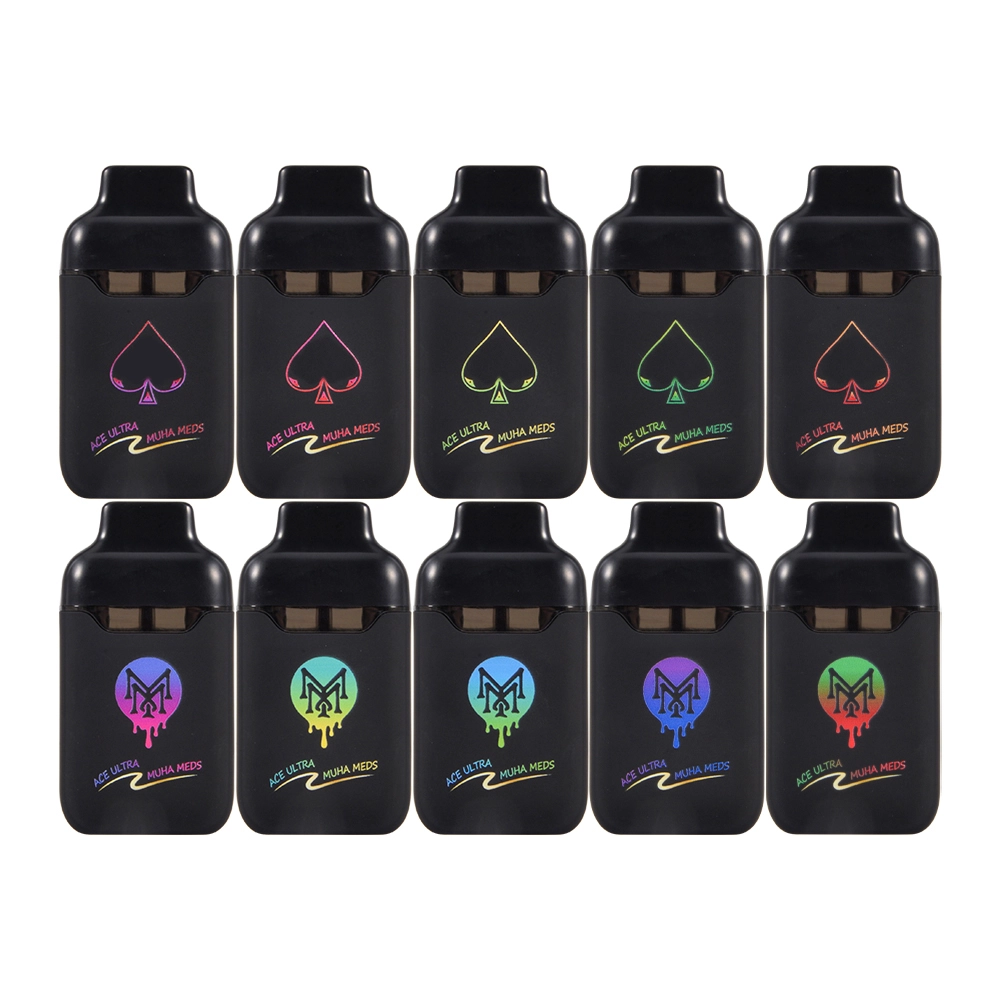
Once you decide that a collaboration-style chassis like the ACE & MM 2g disposable might belong in your catalog, the conversation shifts. You are no longer asking “what is this?” but “does this shell work for our formulas, channels, and standards?”
This is the mid-funnel stage: you dissect the device into tank, coil, battery, housing, and packaging, and you set up simple QC tactics to test whether the ACE & MM 2g empty shell is a fit.
1. Tank and Chamber: Volume, Geometry, and Materials
The chamber of a 2g-class chassis is the foundation of its performance.
Key questions for the ACE & MM 2g shell:
-
Nominal volume – what is the mechanical capacity in ml, and what is the tolerance band?
-
Geometry – is the chamber tall and narrow, or wider and flatter; are there corners that can trap liquid?
-
Wetted materials – which polymer is used for the tank (for example, PCTG), what alloy is used for the center post (often 316L stainless), and what elastomers are used for seals?
You want a chamber that:
-
Can withstand your filling pressure and handling process
-
Supports even draining and avoids “dead pockets” of unrinsed or under-delivered liquid
-
Comes with material declarations that satisfy your compliance and QA teams
If two ACE & MM 2g shells come from different runs and use different plastics or gaskets with no explanation, that is a red flag.
2. Coil and Intake: Matching to Your Formulations
The ACE & MM 2g disposable typically uses a ceramic-based core and a set of intake ports sized for thicker concentrates. But that is still a generalization. Your evaluation should focus on how it behaves with your real liquids.
Important factors:
-
Intake configuration – number and size of intake holes, and how they sit relative to the coil
-
Coil resistance – nominal ohms and allowable variation
-
Thermal profile – the implied power level at which the coil runs, based on battery and internal firmware
Your goal is to avoid two extremes:
-
Under-feeding and dry hits with very viscous formulations
-
Over-feeding, gurgling, and spitting with lighter, thinner blends
A quick mid-funnel tactic is to run small test fills across the viscosity range you care about, then record:
-
Start-up behavior
-
Stability after several sessions
-
Any signs of clogging, scorching, or under-delivery
3. Battery and Electronics: Runtime and Safety Envelope
The ACE & MM 2g shell is marketed as a 2g-class device, so its battery and electronics must be able to carry that promise.
Checklist items:
-
Battery capacity (mAh) and intended session count under normal use
-
Cell documentation, including a summary of testing under relevant transport standards
-
Protection logic – over-current, short-circuit, under-voltage cut-off, and any over-temperature reactions
-
Activation design – pure draw-activation, or a configuration that includes a button and optional preheat
From a B2B perspective, you care about two things:
-
The device should not routinely die before the chamber is reasonably consumed.
-
The device should behave predictably and safely under common misuse (extended draws, partial obstruction, etc.), within its intended envelope.
Make runtime a measured metric, not a guess, by testing a sample set to end-of-life and recording the pattern.
4. Housing and Branding Surfaces
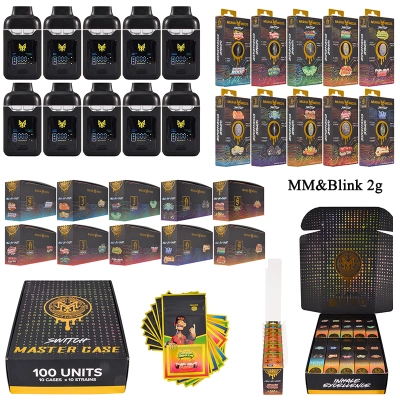
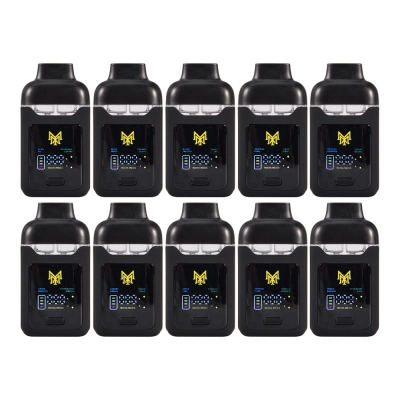
One of the reasons ACE & MM co-branded shells attract attention is the outer body. For evaluation, treat the housing as both a protective structure and a brand canvas.
Key questions:
-
Is the housing made from a robust polymer that resists cracking and warping under normal use and moderate impacts?
-
Do seams stay within tight tolerances, or do you see uneven gaps?
-
How consistent are the colors, gradients, and finishes across multiple units and batches?
-
Is there enough clean space for batch code, capacity markings, recycling symbols, and warnings?
Strong aesthetics are valuable, but only if they can be held at scale. A shell that looks perfect in one small sample but drifts in color or print alignment in real batches will cause support headaches later.
5. Packaging and Cartonization
For 2g-class devices with higher perceived value, packaging matters more than many teams admit.
Evaluate how ACE & MM 2g units are packed:
-
Are devices separated by trays, blisters, or partitions to protect mouthpieces and finishes?
-
How many units per inner and per master carton, and what is the carton strength like?
-
Are there clear markings for batch, production date, and revision codes on outer cartons?
Good packaging reduces transit damage, speeds up warehouse handling, and makes recalls or investigations far simpler if any batch issues arise.
6. QC Tactics for Mid-Funnel Evaluation
You don’t need a full lab to judge whether ACE & MM 2g is worth a deeper pilot. A simple mid-funnel QC checklist can include:
-
Visual inspection of 20–50 units from different cartons for finish quality and assembly flaws
-
Resistance measurement of a subset of devices to see if coils sit within the promised band
-
Basic activation tests to confirm draw or button behavior is consistent
-
Seal checks on unfilled units using mild pressure or vacuum tests to detect gross leaks
Treat the results as a go/no-go filter for a more serious pilot. If basic consistency is not there, you save yourself the cost and time of filling test batches.
7. Use Cases Where ACE & MM 2G Shines
Based on its design, the ACE & MM 2g empty shell is especially suited to:
-
Flagship or collaboration SKUs where design and capacity both matter
-
Gifting bundles and VIP programs, where device feel and runtime affect perceived value
-
Brand-building campaigns that rely on a recognizable hardware silhouette across multiple drops
In commodity or ultra-budget segments, a collaboration-branded 2g shell may be overkill. In premium or story-heavy segments, it can become a repeatable anchor.
Closing Thoughts
At mid-funnel, the ACE & MM 2g disposable stops being a nice render and becomes a hardware object you can judge. By looking at tank, coil, battery, housing, and packaging—and by running small, structured QC steps—you can decide whether this empty chassis deserves a proper pilot with your own fills and channels. The more you treat it like a measurable platform, the less you rely on marketing language to make a serious B2B decision.




0 Comments