
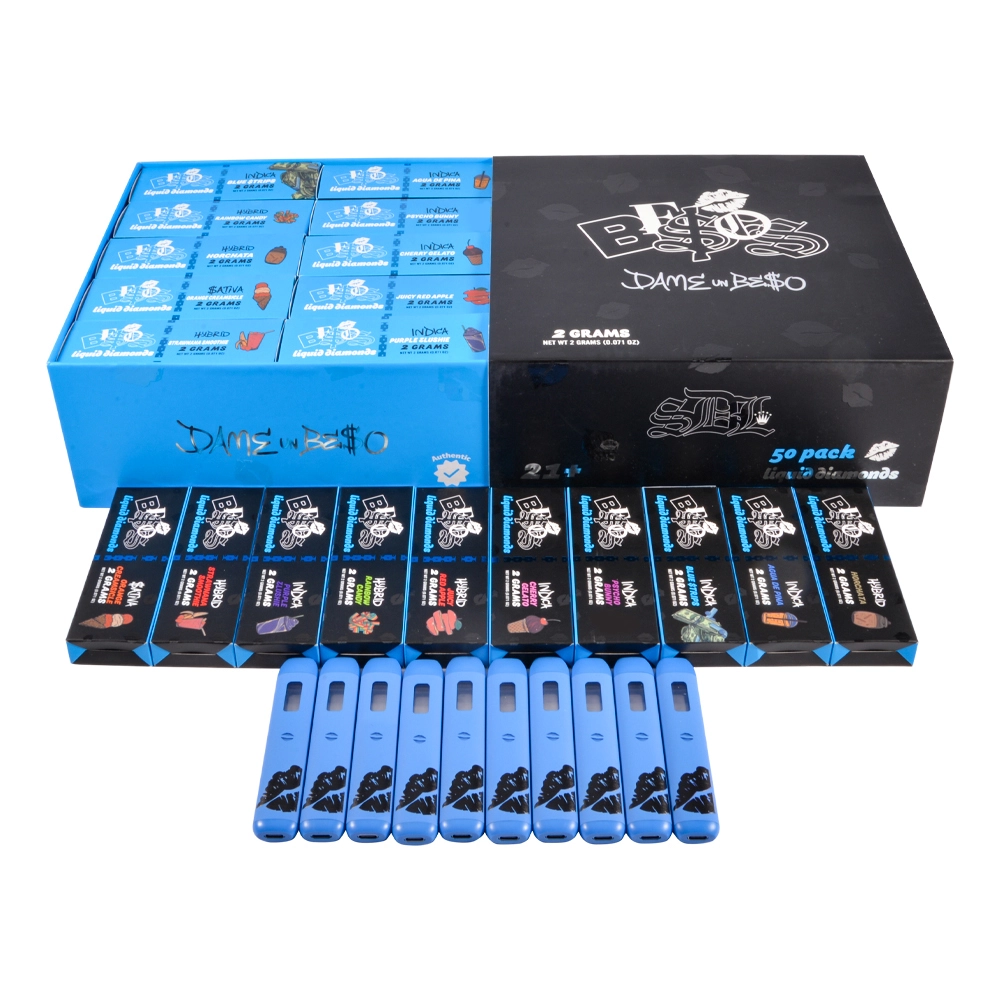
Once you move beyond first impressions, Blue Besos 2G empty disposables stop being just a pretty blue shell and become a set of engineering and process decisions. At mid-funnel, you’re no longer asking “What is it?” You’re asking, “Can this chassis carry our fills, pass our tests, and fit the way we buy and ship?”
This article looks at Blue Besos 2G as mid-funnel hardware: it breaks down core specs, realistic use cases for B2B buyers, and a QC checklist you can apply to incoming samples and lots.
1. Core Specs That Matter for Blue Besos 2G
Different suppliers will give slightly different spec sheets, but Blue Besos 2G-class shells generally share a few structural traits. When you’re qualifying them, focus on three groups: mechanical, electrical, and packaging.
Mechanical
-
Nominal capacity class – approximately 2 grams of target formulation, which must be translated into ml for any markets with tank-size caps.
-
Chamber design – single chamber with a fixed profile; internal geometry that supports even wicking and minimizes dead zones.
-
Intake geometry – number and size of oil intake holes tuned for viscous fills and defined soak times.
-
Mouthpiece and seals – snap-fit or ultrasonic-welded mouthpiece with primary and secondary seals around the chamber.
Electrical
-
Cell chemistry and capacity – a compact lithium cell sized to support the power setting and expected puff count.
-
Protection functions – over-current, short-circuit, and over-discharge protections consistent with good practice for vape devices and aligned with modern electrical-safety standards such as UL 8139.
-
Activation logic – draw-activated or button-activated, with or without preheat pulses.
-
Target resistance – coil resistance band and tolerance, which must be matched to your oil type and power assumptions.
Packaging
-
Unit and inner packaging – trays, blisters, or tubes designed to protect mouthpieces and shells from scratches and impact.
-
Carton spec – number of units per carton, board grade, and how cartons perform under basic drop and vibration tests.
-
Traceability fields – batch ID, production date, and revision codes printed at unit and carton level.
You do not need to publish all of this to your end customers, but you do need it in your files before you commit.
2. Where Blue Besos 2G Fits in Your Use Cases
Blue Besos 2G empty shells usually make the most sense in three B2B scenarios.
Scenario 1: “Premium core” disposable
You want a recognizable, higher-capacity chassis that can be linked directly to your flagship lines. In this case, Blue Besos 2G becomes the anchor hardware: you align your most important SKUs around it, and tune your line setup to its coil and chamber.
Scenario 2: Cross-market bridge
If you operate in both capacity-capped markets (for example, EU/UK nicotine products limited to 2 ml tanks) and more flexible jurisdictions, you may use Blue Besos 2G as a common base and then adjust fill volume and labeling per region. The shell stays the same; regulatory decisions change around it.
Scenario 3: Seasonal and collaboration runs
Because the body has a strong visual identity, it works well for limited editions, seasonal art, or partner collaborations. From a hardware perspective, this is just a print or wrap change; the internal spec stays fixed.
The better your planning, the more you can reuse one Blue Besos 2G spec across these scenarios without increasing your QC burden.
3. QC Checklist for Incoming Blue Besos 2G Shells
Once samples arrive, you should treat them exactly like any other technical component. A simple QC checklist keeps the process consistent.
Visual and dimensional checks
-
Inspect shell color, print quality, and coatings for scratches, voids, or misalignment.
-
Measure key dimensions (length, width, thickness, mouthpiece size) and compare to the spec sheet.
-
Check that mouthpieces sit flush and seals are not visibly twisted or pinched.
Functional checks (unfilled)
-
Verify activation: every sampled unit should wake up when you draw or press the button.
-
Confirm LED behavior matches the agreed logic (activation pulse, low-battery warning, cut-off).
-
On a small number of test units, measure coil resistance and ensure it lies within the promised band.
Structural and seal checks
-
Apply a mild negative-pressure test (for example, using a simple test jig) to see whether any unfilled units show obvious leaks or air paths where they should not.
-
Run a short thermal cycle on a handful of units (for example, room temperature to mild heat and back) and recheck seals and fits.
Document everything, even at the sample stage. That documentation becomes the baseline for later lot-acceptance decisions.
4. Designing a Pilot Batch for Blue Besos 2G
Before you scale, run at least one pilot batch of Blue Besos 2G with your own fill, using production-like conditions.
Key steps:
-
Define target fill and soak – set a specific gram and ml target, plus soak time, based on your oil or liquid.
-
Check leak and condensation behavior – store filled pilot units in realistic packaging, then inspect after a defined period for leaks, sweating, or visible condensation around the mouthpiece and seams.
-
Measure draw and performance – have a defined panel or bench test comparing draw resistance and vapor output across multiple samples.
-
Simulate transit – subject packaged pilot units to basic vibration and drop tests or equivalent handling and recheck for damage.
The goal is not to prove perfection. It is to learn how this chassis behaves when your own variables—fill, environment, logistics—are added to the equation.
5. Commercial Considerations Around Blue Besos 2G
Even at mid-funnel, you should begin to align technical comfort with commercial reality:
-
Minimum order quantities and lead times – can you get the lots you need with enough buffer for QC and seasonal demand?
-
Revision and change control – what happens if the supplier wants to change coil, cell, or plastics?
-
Documentation updates – how quickly can you receive updated spec sheets and safety documents if a revision is approved?
Any chassis that passes technical tests but fails on these points will create friction later, especially once your customers start treating Blue Besos 2G as “their” format.
Closing: From Spec Curiosity to Structured Evaluation
At this stage, Blue Besos 2G empty disposable hardware is no longer just something your marketing team likes. It’s a defined set of mechanical, electrical, and packaging specs that can be measured, tested, and documented. A clear QC checklist and a realistic pilot plan turn that shell into a predictable component. If it continues to behave under your own process and cost constraints, it is ready to move into bottom-of-funnel decisions about standardization and long-term commitments.
If u wanna know more details, pls go to these pages: USA blue besos 2grams, best besos disposable,empty disposable vape pen


0 Comments