
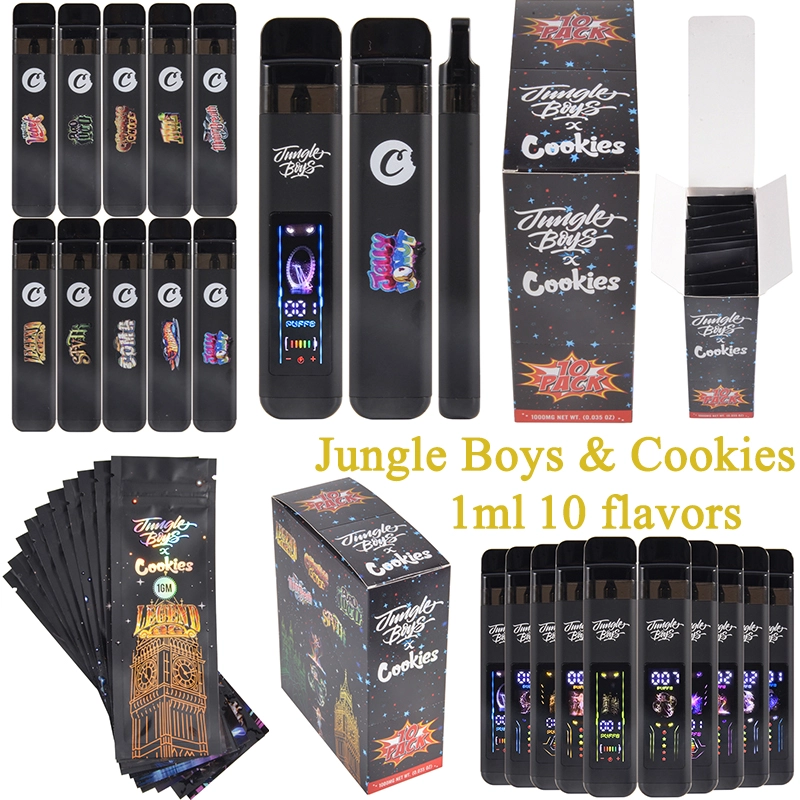
“Black Jungle Boys Disposables 1G” (empty pod) refers to a sleek 1 mL/1 g bar-style shell built for thick-oil programs. At mid-funnel, the question is not hype but evidence: does the chassis start clean, finish the tank, ship without leaks, and come with audit-ready documentation? This guide turns brand recognition into a procurement checklist—so your pilot becomes a confident PO.
What You’re Actually Buying (Hardware Definition)
-
Form factor: compact rectangular bar with flat panels for warnings, batch/lot IDs, and serialization.
-
Capacity: 1.0 mL (1 g) class reservoir with a visible safe-fill line.
-
Heating: advanced ceramic core with a tight resistance window for even heat.
-
Airflow: smooth, medium draw tuned for viscous oils; optional gentle preheat (if supported) to clear condensation without scorching.
-
Power: USB-C rechargeable lithium cell sized to reasonably finish 1 g; protections for short-circuit, over-charge, and over-discharge.
-
Seal stack: controlled gasket compression + repeatable mouthpiece torque; clean ultrasonic welds to reduce headspace weep.
-
Finish: abrasion-resistant coatings; color/texture options that won’t compromise legibility of compliance text.
Treat “Black Jungle Boys Disposables 1G” as style language for an empty shell unless you hold explicit brand authorization for marks/artwork.
Spec Snapshot (Targets to Verify in Pilot—not promises)
-
Capacity: 1.0 mL (safe-fill visible)
-
Coil: ceramic; ~1.0 Ω nominal for thick oils
-
Intake geometry: multiple inlets, effective area equivalent to ~4×1.5–1.6 mm (or documented equivalent)
-
Airflow: medium, consistent draw; low turbulence
-
Runtime: cell/output tuned to finish 1 g with ≤1 top-up (typical)
-
USB-C port retention: pass insertion/rock testing; stable charge handshakes
-
Tolerances: repeatable gasket compression; specified mouthpiece torque band
-
Materials (oil-contact): device-level heavy-metal/materials results available
Why MOFU Buyers Shortlist This Platform
-
Thick-oil readiness – short, smooth feed channels and adequate intake area lower back-pressure after soak/cure, improving first-minute experience.
-
Even ceramic heat – a narrow resistance window reduces hot spots and late-tank scorch, stabilizing flavor and complaint ratios.
-
Runtime credibility – conservative output curve + right-sized cell aimed at finishing 1 g without “dies early” tickets.
-
Leak/DOA discipline – weld quality, torque consistency, and gasket chemistry minimize freight-induced weep.
-
Paperwork that clears audits – a compact dossier lets compliance say “yes” quickly.
The Documentation Packet You Should Demand (Audit-Speed)
-
Exploded views & dimensions: intake count/diameter/placement, resistance window, mouthpiece torque spec.
-
Filling SOP: recommended temperature, target headspace, safe-fill line usage, soak/cure window.
-
Safety statements: device/battery protections (short-circuit, over-/under-charge) and lithium transport test summary for the exact cell/pack.
-
Assembled-unit materials/heavy-metal results: finished atomizer level (not just raw materials) for oil-contact parts.
-
QC regimen: pressure/air-tightness on finished assemblies; thermal cycling, vibration, drop; defined AQLs and RMA/CAPA terms.
-
Packaging map: reserved zones for warnings, batch/lot IDs, and serialization; art overlays pre-checked for legibility.
Pilot Plan (One Week to a Confident Go/No-Go)
Run an A/B against your current 1 g device using your own viscosity:
-
Bench checks: seals, torque, USB-C retention, finish abrasion, safe-fill visibility.
-
Pilot fill: 300–500 units; follow vendor fill/headspace/soak guidance precisely.
-
Stress ship: cycle cold↔heat and vibration/drop to mirror your lanes.
-
Track five KPIs:
-
Post-transit leak rate (per 100)
-
First-10-puff success (no harshness/gurgle without tricks)
-
Runtime to near-empty (top-ups to finish 1 g)
-
Clog-resolution incidence (week-one interventions)
-
DOA/early failure (activation/charge faults out of box)
-
-
Decision gate: approve only if “Black Jungle Boys Disposables 1G” meets or beats your baseline on all five KPIs.
-
Freeze spec: lock molds/BOM; retain golden samples; set incoming inspection bands (resistance, finish, torque).
Acceptance bands many teams use (calibrate to your norms):
-
Leaks ≤ 1.0/100 post-transit; First-10-puff ≥ 95%; DOA ≤ 0.5%; Clog ≤ 2%; ≤ 1 top-up to empty.
Operations & Packaging (Where Margin Leaks or Stays)
-
ERP-ready carton labels: scannable lot/batch codes to speed receiving and improve recall discipline.
-
Dividers/desiccants: protect finishes and control condensation.
-
Color/finish tolerances: attach swatches to the PO; keep shelf presentation consistent across reorders.
-
Pre-shipment inspection (PSI): sample from transport-ready cartons; verify resistance, torque, finish, label positions.
MOQ, Lead Time & Commercial Terms
-
Tiering: typical breaks at 5k / 10k / 50k / 100k+ with constrained color options at lower tiers.
-
Spec freeze clause: no component/finish substitutions without written approval.
-
RMA/CAPA: who-pays-freight defined; credit timelines documented.
-
EOL notice: minimum lead time for retiring colors/components to keep planograms stable.
Red Flags (Walk Away Fast)
-
Prefilled offers or ambiguous “brand authorization.”
-
Generic PDFs not tied to your exact SKU and current production dates.
-
Drift between samples and the first pilot lot (resistance, intake geometry, finishes).
-
No pressure-test method, no AQL numbers, or vague RMA terms.
-
Packaging art that crowds warnings or leaves no room for serialization.
Quick Intake Checklist (Copy/Paste to SOP)
□ Empty-hardware-only statement
□ Exploded views + intake specs + resistance window + torque
□ Fill/headspace/soak-cure guidance
□ Device/battery safety statement + lithium transport summary
□ Assembled-unit materials/heavy-metal results (oil-contact parts)
□ QC regimen (pressure, thermal, vibration, drop) + AQLs + RMA/CAPA
□ Packaging map; ERP-ready carton labels; batch/lot coding
□ Spec freeze; golden samples; color/finish tolerances; EOL notice
□ Lead-time tiers (5k/10k/50k/100k+) and PSI date
For Black Jungle Boys Disposables 1G to earn a PO, it must prove thick-oil intake, even ceramic heat, realistic runtime, and low leak/DOA—backed by assembled-unit materials tests, lithium transport documentation, and a numeric QC story. Pilot it with your oil, stress-ship it like your lanes do, freeze the spec, and you’ll have a 1 g empty-pod backbone that scales cleanly through 2025.

0 Comments