
What You’re Actually Buying
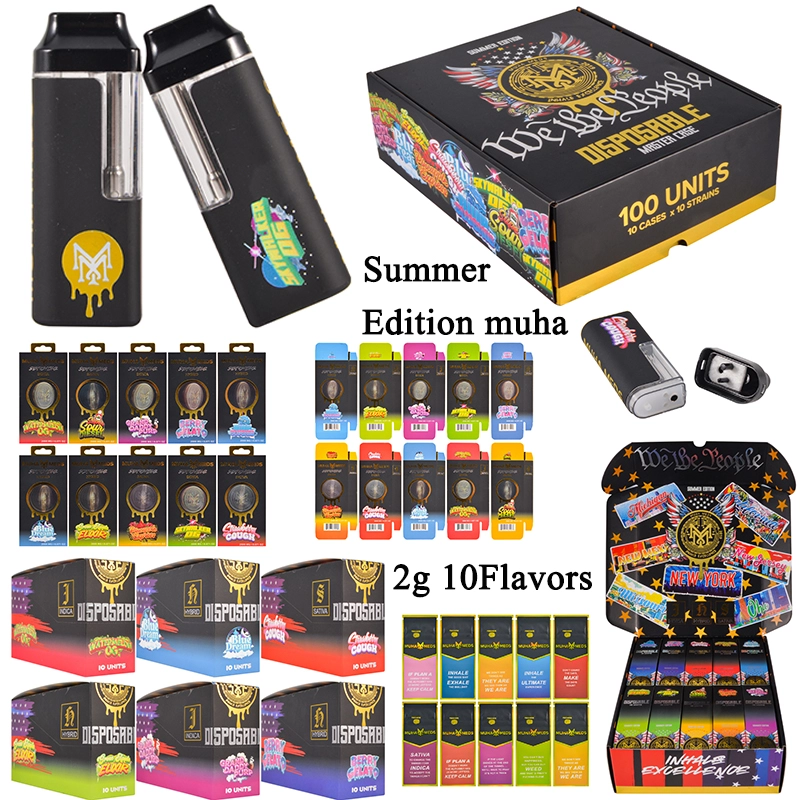
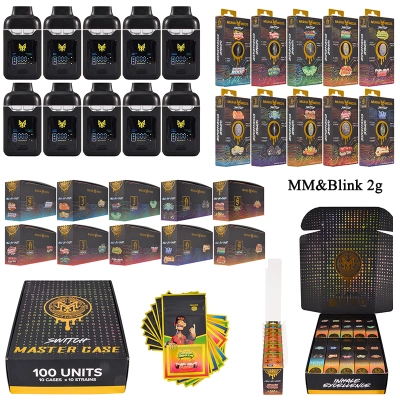
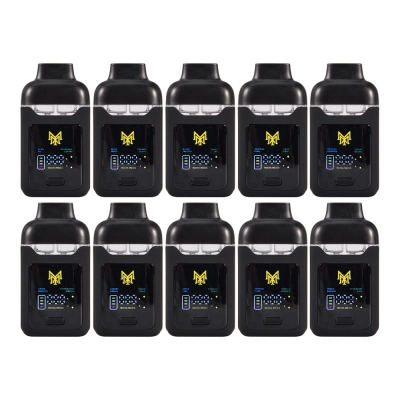
A Muha-style device is a bar-form 1G/2G empty disposable engineered to move viscous oil through multi-port intakes, heat it evenly with a ceramic core (~1.0 Ω nominal), and deliver a medium, smooth draw. A USB-C cell with short-circuit/over-/under-charge protections powers the unit long enough to realistically finish the reservoir. Flat chassis planes reserve space for warnings, batch/lot IDs, and serialization.
Core Subsystems (and why each matters)
-
Reservoir & Headspace
-
Food-grade PCTG with a visible safe-fill line.
-
Controlled headspace prevents thermal expansion weep after filling.
-
-
Intake Map
-
Effective intake area typically equivalent to ~4×1.5–1.6 mm ports (or documented equivalent).
-
Port height above the tank floor and short, smooth channels reduce back-pressure and speed wet-out after soak/cure.
-
-
Ceramic Heater & Output Curve
-
Tight resistance window around ~1.0 Ω spreads heat uniformly to avoid hot spots and late-tank scorch.
-
Optional gentle preheat clears condensation without cooking the formula.
-
-
Airflow Path
-
Balanced, medium draw via a laminar chimney; internal baffles reduce gurgle.
-
-
Power & Charging
-
USB-C rechargeable cell sized to finish 1G/2G with realistic ≤1 top-up (median for 2G).
-
Protections: short-circuit, over-charge, over-discharge.
-
-
Seal Stack
-
Correct gasket compression, clean ultrasonic welds, and repeatable mouthpiece torque are the single biggest drivers of leak/DOA rates.
-
Spec Snapshot (targets to verify in pilot)
-
Capacity: 1.0 mL or 2.0 mL (safe-fill visible)
-
Coil: ceramic ~1.0 Ω (tolerance documented)
-
Intake: multi-port, high-area geometry matched to your viscosity band
-
Airflow: medium and consistent; low turbulence audio
-
Runtime: charge behavior that finishes the tank; stable USB-C port retention
-
Materials: assembled-unit heavy-metal/materials results for oil-contact parts
-
Packaging: fixed zones for warnings, batch/lot, serialization
Filling & Cure Basics (reduce clogs and weep)
-
Fill temperature matched to viscosity; don’t exceed material limits.
-
Respect the safe-fill line and headspace target.
-
Soak/cure window before activation; early firing raises gurgle/returns.
Documentation Packet (audit-speed onboarding)
-
Exploded views & dimensions (intake count/diameter/placement; resistance window; torque spec)
-
Filling SOP (temperature, headspace, soak/cure)
-
Device/battery safety statement + lithium transport test summary for the exact cell/pack
-
QC regimen: pressure/air-tightness on finished assemblies; thermal cycling, vibration, drop; explicit AQLs and RMA/CAPA
-
Packaging map: warning blocks, serialization, scannable barcodes
-
Standards commonly referenced by buyers: UN 38.3 (transport), IEC 62133-2 (cells), UL 8139 (e-device safety)
One-Week Pilot (the five KPIs that predict returns)
-
Post-transit leak rate after cold↔heat + vibration/drop: ≤ 1.0/100
-
First-10-puff success (no harsh/gurgle): ≥ 95%
-
Runtime to near-empty: ≤ 1 recharge (median) for 2G; 0–1 for 1G
-
Clog-resolution incidence (week one): ≤ 2%
-
DOA/early failure: ≤ 0.5%
Red Flags (walk away fast)
-
Prefilled offers or vague “authorization”
-
Generic PDFs not tied to your exact SKU and fresh lot dates
-
Resistance/intake/finish drift between samples and pilot
-
No pressure-test method, no AQL numbers, vague RMA terms
-
Packaging art that crowds warnings or hides serialization
Takeaway
A Muha-style backbone wins when intake area, ceramic stability, seals, and USB-C runtime are proven with numbers and backed by documents you can drop into SOPs without rewrites. Pilot with your oil, freeze molds/BOM, and month-12 will feel like month-1—at scale.
If you wanna know more details, pls go to these pages: wholesale muha meds, custom muha meds disposable, muha meds disposables 2 gram.


0 Comments