
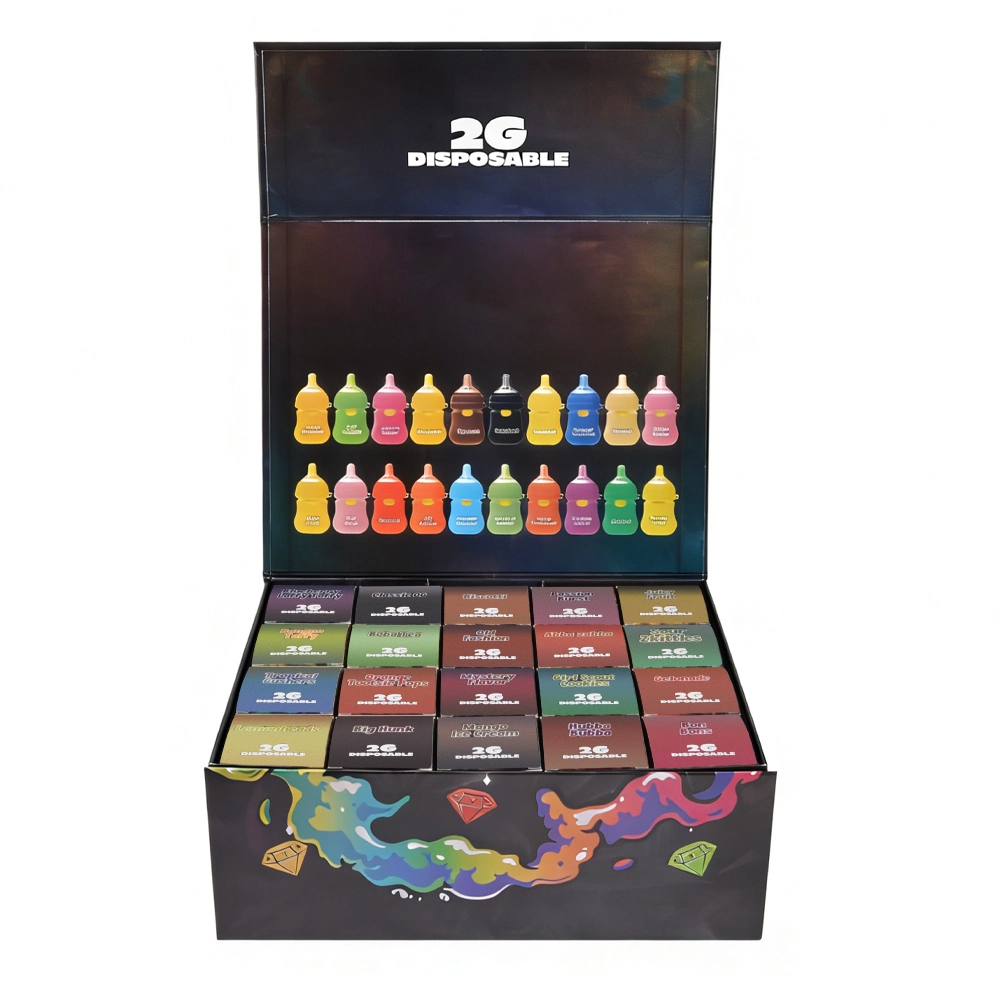
Once a 2g-class chassis like the Crybaby Disposable 2g Baby Bottle Edition enters your mid-funnel review, the conversation shifts from “what is it?” to “does it meet our technical, operational, and quality standards?” At this stage, subjective impressions give way to measurable evaluation. Mid-funnel (MOFU) analysis bridges the gap between high-level familiarity and hands-on testing, helping teams identify whether a shell is suitable for pilot integration without committing excessive resources.
MOFU evaluation is about dissecting the device into its critical components — tank, coil, battery, housing, and packaging — and assessing their performance against defined criteria. It also introduces simple quality control (QC) tactics to detect inconsistencies or risks. By the end of this stage, you should have a clear view of whether the shell is capable of supporting your formulations, channels, and operational expectations.
1. Tank and Chamber: Measurable Foundations
The chamber forms the backbone of the Crybaby 2g shell. At MOFU, evaluation moves beyond nominal specifications to include real-world measurement and consistency checks. Begin with volume assessments, using calibrated tools to confirm nominal capacity and tolerance bands. Geometry matters: a tall, narrow chamber may behave differently than a wider, flatter design, particularly with viscous liquids. Look for corners or irregular surfaces that could trap liquid, causing under-delivery or inconsistent performance.
Material evaluation is essential. Polymers like PCTG, metals such as 316L stainless, and elastomers for sealing all need verification. Material declarations should be traceable and meet internal compliance requirements. Variations between batches — even subtle differences in plastics or gaskets — are red flags. By measuring and documenting these aspects across multiple units, you gain a quantifiable understanding of structural reliability and manufacturability.
2. Coil and Intake: Aligning Design with Formulations
The coil and intake determine how effectively a device delivers liquid under typical use. For the Crybaby 2g Baby Bottle Edition, most units use a ceramic-based core with intake ports sized for viscous solutions. However, generalizations are insufficient. The MOFU stage involves testing real formulations to understand how the design behaves in practice.
Key evaluation criteria include intake configuration, coil resistance, and thermal profile. The number and placement of intake holes influence how evenly liquid reaches the coil. Coil resistance and allowable variation affect heating efficiency and session consistency. Thermal performance, derived from battery characteristics and firmware controls, defines safe operating ranges and longevity.
Mid-funnel tactics include performing small test fills across the target viscosity spectrum. Record start-up behavior, stability over multiple draws, and any signs of clogging or scorching. The goal is to avoid both underfeeding — which can cause dry hits — and overfeeding, which can lead to gurgling or spitting. A structured approach ensures your evaluation is based on data rather than assumptions.
3. Battery and Electronics: Runtime and Safety Checks
Battery capacity and electronic safety features are central to device performance. At MOFU, focus on verifying documentation and conducting empirical runtime checks. Confirm battery capacity, session expectations, and protective circuitry such as over-current, short-circuit, and under-voltage cutoffs. Activation design, whether draw-activated or with a button, should be tested for consistency.
Practical evaluation involves measuring runtime across a representative sample, noting patterns until chamber depletion. Devices should not die prematurely, and performance should remain predictable even under common misuse scenarios like extended draws or partial blockage. MOFU tests allow teams to quantify reliability, supporting informed go/no-go decisions for pilot programs.
4. Housing and Branding: Functional Aesthetics
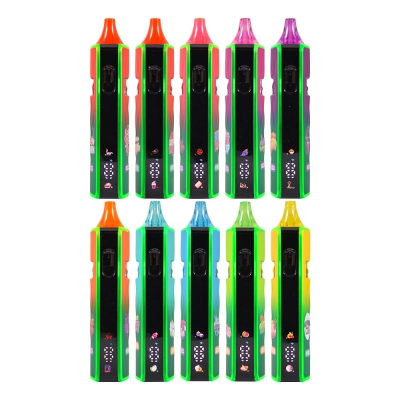
The outer housing serves as both protection and a visual identity canvas. During mid-funnel evaluation, assess material robustness, seam tolerances, and aesthetic consistency across multiple units. Minor inconsistencies in color, gradient, or finish can become larger issues in scaled production.
Also, evaluate functional aspects such as space for batch codes, capacity markings, recycling symbols, and safety warnings. A housing that performs well in a single unit but varies across production runs poses downstream operational challenges. MOFU assessment ensures the visual and structural elements can hold up at scale.
5. Packaging and Cartonization: Operational Readiness
For higher-value 2g-class devices, packaging plays a critical operational role. Assess whether units are adequately separated by trays, blisters, or partitions to protect delicate components. Evaluate inner and master carton design for strength, labeling clarity, and batch traceability. Proper packaging reduces transit damage, facilitates warehouse handling, and streamlines investigation or recall processes if issues arise.
Mid-funnel packaging evaluation doesn’t require full logistics simulation but should identify glaring vulnerabilities. These insights inform decisions about whether a shell is ready for pilot-scale deployment or needs adjustments in handling and packing.
6. QC Tactics for Mid-Funnel Evaluation
A structured mid-funnel QC checklist helps filter poor-performing units before expensive pilot production. Recommended steps include:
-
Visual inspection of 20–50 units for finish quality and assembly flaws.
-
Resistance measurement on a subset of coils to confirm specifications.
-
Basic activation tests to ensure draw or button behavior is consistent.
-
Seal integrity checks on unfilled units using mild pressure or vacuum methods.
Treat these results as a go/no-go filter. If basic consistency is lacking, it saves time and resources by preventing unsuitable units from reaching pilot production.
7. Ideal Use Cases for the Crybaby 2g Shell
Mid-funnel evaluation also clarifies where this chassis excels. The Crybaby 2g shell is particularly suited for:
-
Flagship or collaboration SKUs where design and capacity are key.
-
Gifting or VIP bundles, where device feel and runtime influence perceived value.
-
Brand campaigns leveraging a recognizable hardware silhouette.
Conversely, in commodity or ultra-budget segments, such a collaboration-branded shell may be over-engineered and add unnecessary cost.
Conclusion
At the mid-funnel stage, the Crybaby Disposable 2g Baby Bottle Edition transitions from an appealing render to a measurable hardware platform. By systematically evaluating tank, coil, battery, housing, and packaging — and running small-scale QC tests — teams can determine whether a pilot program is justified. MOFU analysis ensures that decisions are grounded in data and performance, not assumptions, setting the stage for confident bottom-funnel decision-making.
If u wanna know more details, pls go to these pages: cbd vape pen bulk, crybaby baby bottle 2g, US crybaby 2g disposable baby bottle

0 Comments