
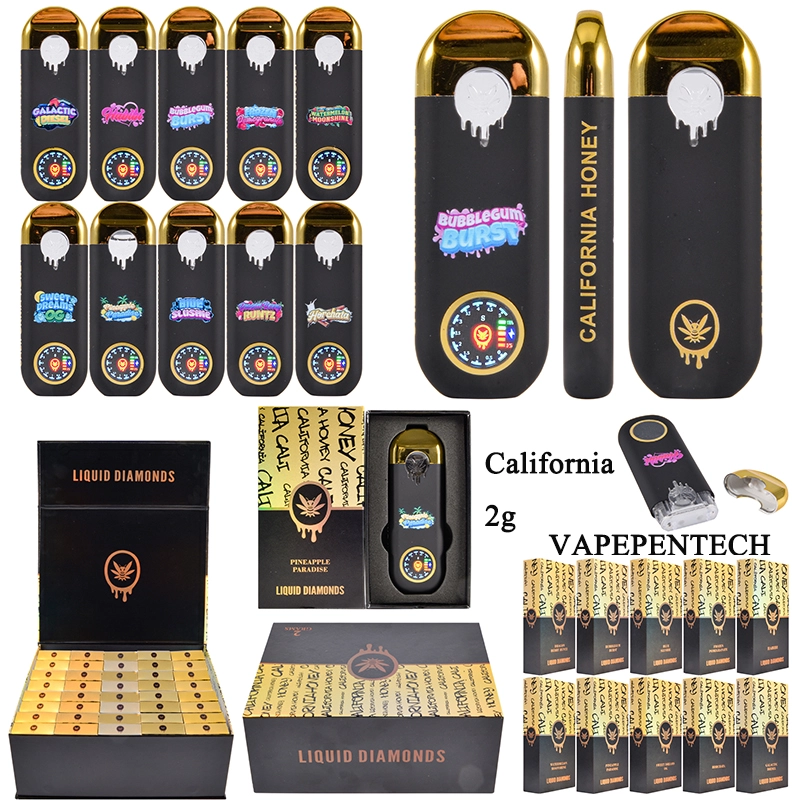
By the time you reach the decision stage, you already know what a California 2g disposable is and which spec range you prefer. Now the question becomes harder: Do we trust this shell enough to treat it as a platform for serious volume?
Bottom-of-funnel content should help you answer that question with evidence, not gut feeling. This article outlines pilot KPIs, QC practices and risk controls you can use before approving a California 2g disposable empty shell for long-term use.
1. Defining What “Approval” Means
Start by making internal expectations explicit. Approval typically implies:
-
You will align multiple SKUs or projects on this chassis.
-
Your filling SOPs and fixtures will be tuned to its geometry and behavior.
-
Marketing and sales teams will treat it as a recognizable device family.
-
Your compliance and quality systems will assume its spec is stable over time.
Because of that weight, approval should be conditional: the shell must meet agreed thresholds in performance, documentation and supplier behavior.
2. Structuring a Pilot: From Samples to Small Batch
A proper pilot goes beyond a handful of hand-filled units. A good sequence looks like:
-
Engineering samples – enough units to test fill fit, assembly ease and initial behavior.
-
Pre-production batch – a few hundred devices filled on your actual equipment, stored and shipped through realistic routes.
-
Field trial – controlled distribution to a limited set of accounts or markets with close feedback loops.
At each stage, you should collect data, not just impressions.
3. Core KPIs for a California 2G Pilot
For a 2g platform, key KPIs include:
Leak and major defect rate
-
Percentage of units with chamber leaks, severe condensation or broken housings after filling, storage and simulated shipping.
-
Thresholds should align with your AQL standards and previous hardware families.
Draw consistency
-
Variation in draw force across a meaningful sample, measured with instruments or a trained panel.
-
Units outside the acceptable band should be rare and traceable.
Runtime and end-of-life behavior
-
Typical number of sessions or active seconds to end-of-life under your real fill and usage assumptions.
-
Observed behavior at low battery—does the device taper gracefully, or fail abruptly?
Visual conformity
-
Rate of unacceptable cosmetic defects in housing, gradient, logos and seams.
-
Correlation with specific production lots or coating processes.
Complaint simulation
-
Internal scoring of how many units would likely trigger a customer complaint if shipped.
-
Comparison against your existing best-performing shells.
Only when the California 2g shell matches or beats your benchmark hardware on these metrics does it become a serious candidate.
4. Incoming QC and Ongoing Monitoring
Approval does not mean blind trust. For each incoming batch, build a light but effective QC routine.
Elements to include:
-
Visual inspection – random sampling of units for finish, seams, print quality and obvious defects.
-
Dimensional checks – verifying key dimensions such as body width, length and mouthpiece fit against the spec.
-
Electrical checks – spot-checking coil resistance and basic activation behavior.
-
Seal integrity tests – simple negative-pressure or pressure tests on unfilled devices to flag gross leaks.
Document your acceptance criteria per KPI and keep records tied to batch numbers. This creates traceability if issues emerge later.
5. Documentation and Change Control
A California 2g disposable becomes truly valuable when its behavior is predictable over time. That depends heavily on documentation and change control.
At minimum, require:
-
Full spec sheet with chamber volume, coil resistance band, battery capacity, materials and tolerances.
-
Material declarations for the wetted path and key plastics.
-
Battery test summary for the cell used, demonstrating transport compliance.
-
A supplier-side change control policy covering:
-
Which components are considered critical
-
How you will be notified of proposed changes
-
How revisions are labeled in documentation and on packaging
-
In practice, you want to avoid discovering a silent change to coil material or housing polymer through rising complaint rates.
6. Commercial and Strategic Filters
Even with strong technical performance, a California 2g shell must fit your commercial reality.
Consider:
-
MOQ and lead time – do they align with your forecast and cash cycle?
-
Seasonality – are 2g devices central to your whole-year strategy, or concentrated around specific promotions?
-
Market fit – can the same chassis, possibly with different fill levels, serve your key markets without constant re-engineering?
-
Portfolio balance – does committing to this 2g platform crowd out other formats you still need?
Sometimes the right answer is to approve the shell only for specific channels or regions, keeping your broader portfolio diversified.
7. Conditions for a Confident “Yes”
Summarize your approval conditions as a checklist. A California 2g disposable platform is ready when:
-
Pilot KPIs for leaks, runtime, draw consistency and visual quality meet agreed thresholds.
-
Documentation for materials and battery safety is complete and stored in your systems.
-
The supplier has demonstrated reliable batch-to-batch control and a workable change-control process.
-
Commercial terms (price, MOQ, lead time) support your targets.
-
Internal teams—operations, quality, marketing and compliance—are all aligned on its role.
Only then should you treat the platform as a default choice for new SKUs or markets.
Closing Thoughts
Saying “yes” to a California 2g disposable empty shell is not about liking the color or following a trend. It is about deciding that this chassis can carry your brand, your formulas and your compliance responsibilities for the next year or more. By grounding that decision in pilots, KPIs, QC and documented change control, you turn a stylish piece of plastic and metal into a trusted platform—one that can be scaled with confidence instead of crossed fingers.
If u wanna know more details, u could go to these pages: california honey online, cheap vape pen california honey disposasble,


0 Comments