
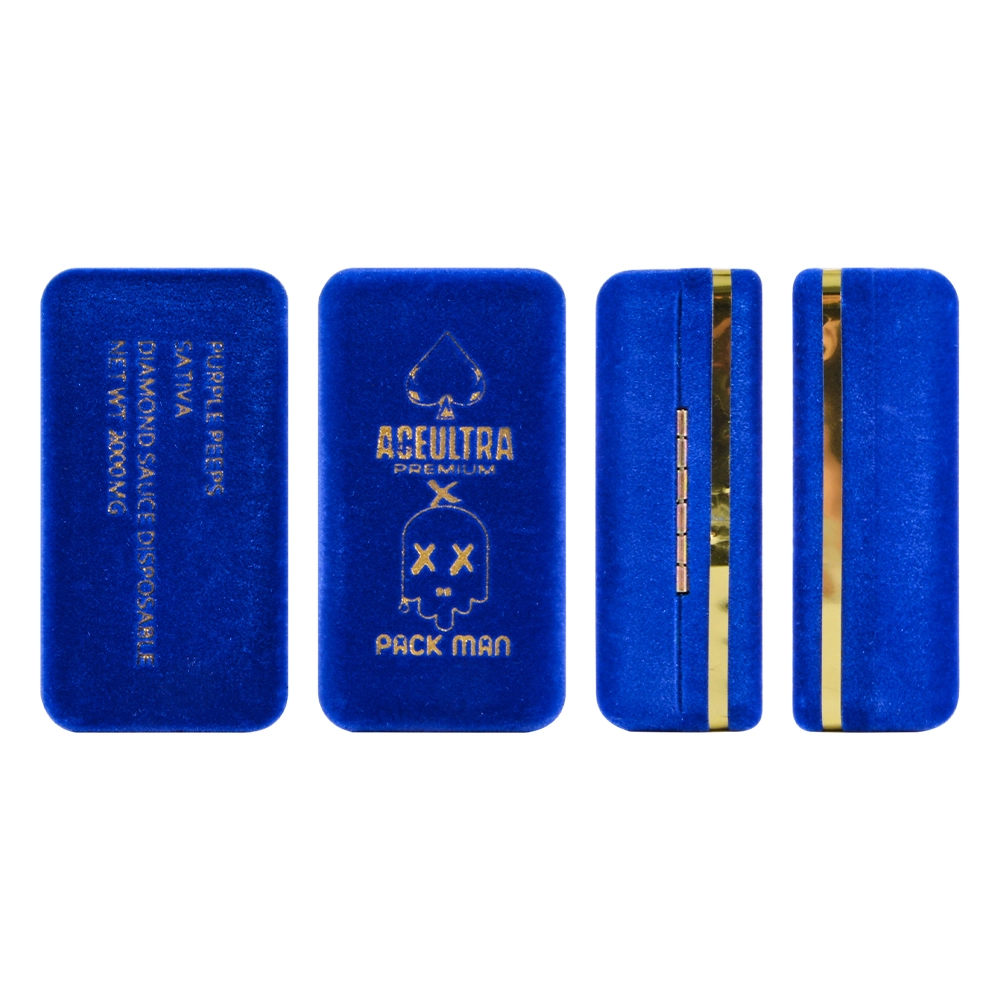
ACE Packman 1000mg empty cartridges compare well against mainstream competitors on three fronts: quality (tight tolerances, ceramic atomization, consistent airflow), safety (materials documentation such as RoHS/REACH, clean contact surfaces), and value (reliable yield with manageable defect rates). Because counterfeits remain common, the gap between a good batch and a bad one is usually traceability and compliance proof, not marketing. ACE’s V1/V2 iterations, brand-forward aesthetics, and “high-compatibility ceramic” positioning are meaningful to B2B buyers when they are backed by batch IDs, incoming-inspection data, and a responsive RMA process. This guide stays practical and standards-based for 2025 procurement, product management, and compliance.
Key Takeaways
• Robust, leak-resistant builds perform best when tolerances and O-rings are verified on intake.
• Ask suppliers for current RoHS/REACH material evidence for all wet-contact parts.
• For viscous oils, a 1.6–2.0 mm filling needle and batch pre-tests reduce clog/leak risk.
Terminology and Standards for Empty ACE Packman 1000mg
Cartridge Capacity and Measurement
“1000 mg” is commonly used as shorthand for ≈1.0 mL nominal capacity. Actual fill should be controlled by volume, with headspace and cap force validated during trials.
Empty Cartridge Definition
“Empty” means no oil, no battery, no electronics—hardware only. Do not conflate with AIO/disposable devices, which trigger additional electrical and transport requirements.
Thread Types and Compatibility
ACE Packman 1000mg typically uses 510 thread, maximizing cross-battery compatibility. Pod/press-fit variants exist but are ecosystem-bound; 510 remains the most flexible for B2B stocking.
Quality Comparison: Pack Man Carts vs. Competitors
Coil and Wire Materials
Ceramic heating cores paired with FeCrAl or SS316L are preferred for even heat and neutral flavor. ACE units generally present uniform pores and rapid wet-back, which supports consistent delivery across puffs.
Oil Chamber and Build Quality
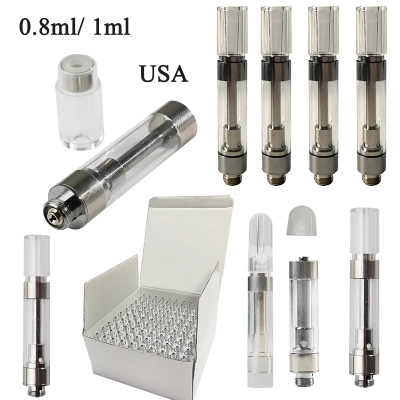
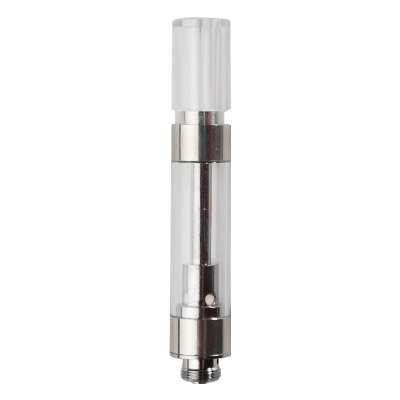
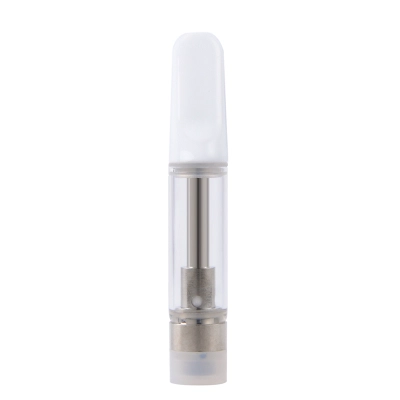
Common chambers include PCTG or glass with stainless steel wetted components. Glass offers top inertness; high-grade PCTG reduces breakage in logistics. Inspect thread smoothness, seat flatness, and cap runout—these correlate strongly with leak performance.
Leak-Proof Features
Look for dual/triple O-ring stacks, defined negative-pressure cavities, and press-fit geometries with controlled interference. Validate via 48 h upright/invert rests, thermal cycle, and drop/vibration routines. ACE V2 units generally show smoother bore finishes and slightly freer airflow than V1.
Potency and Authenticity
Hardware does not create potency; it must preserve it. Authenticity rests on serialization/QR, consistent laser marks, and box-to-unit batch mapping. Treat unusually low pricing as a risk flag.
Filling, Compatibility, and User Experience
Filling Methods and Needle Gauge
Top-fill with screw or snap caps is standard. For thicker matrices, 1.6–2.0 mm needles reduce shear and fill time. Record cap force, fill mass/volume, and post-fill headspace to stabilize yields.
Oil Viscosity and Testing
Use a small thermal assist if needed, but avoid overheating. Run pilot sets (e.g., 10–20 pcs) to log leak/clog after 24–48 h, then proceed to production if results are clean.
Battery Compatibility
For most ceramic 1.0 mL carts, 2.5–3.7 V (≈7–12 W depending on coil) balances flavor and stability. Aggressive power curves elevate condensation and flood risk; match airflow and voltage to the matrix.
Safety, Compliance, and Authenticity
Material Safety Standards
Request current RoHS and REACH/SVHC declarations (and, where possible, third-party test summaries) for mouthpiece, tank, center post, seals, and wicks. Keep validity dates on file.
Authenticity Verification
Require batch IDs, QR/serials, and carton-to-unit reconciliation. On intake, photo-log labels and reject duplicated or unreadable codes.
Compliance for Empty Cartridges
For empty hardware, focus on materials compliance and packaging robustness. Standards like UL 8139 and UN 38.3/IATA apply only when a battery is present (AIO/disposable). Maintain this boundary in specs and SOPs.
Packaging, Transport, and Procurement
Packaging and Transport
Favor inner trays that immobilize mouthpieces and isolate tanks, with outer cartons validated through small-parcel simulation (e.g., ISTA 3A-type routines). Document drop heights, vibration spectra, and acceptance criteria.
Supplier Documentation
Minimum pack: RoHS/REACH letters, material list for wetted parts, cap/fit force targets, AQL plan, and change-control (ECN) protocol. If you will later pair with a battery, pre-negotiate UL 8139 and UN 38.3 evidence for the finished assembly.
Procurement Checklist
• Confirm legal entity, production site, and QC contacts.
• Small-trial 5–10 pcs per variant; log fill, headspace, 48 h leak, and cap removal force.
• Approve labels/artwork for accuracy and traceability.
• Define RMA triggers (e.g., >2% functional defect) and turnaround times.
• Archive all batch documents with PO and inbound inspection records.
Comparison Table: Empty ACE Packman 1000mg vs. Other Brands
Specification Table
| Model | Atomizer/Wire | Chamber Material | Filling/Capping | Sealing Structure | Recommended Power/Voltage | High-Viscosity Notes |
|---|---|---|---|---|---|---|
| ACE Packman 1000mg | Ceramic + FeCrAl | Glass / PCTG | Top-fill, screw cap | Dual O-ring, press-fit | 2.5–3.7 V | Handles viscous oils; monitor clog on cold starts |
| Ace Ultra Premium | Ceramic + SS316L | Borosilicate glass | Top-fill, snap cap | Triple O-ring, tight fit | 2.5–4.0 V | Strong for very thick matrices |
| Generic 510 | Cotton + Kanthal | Polycarbonate | Bottom-fill, push cap | Single O-ring | 2.5–3.5 V | Higher leak risk with heavy oils |
Pros and Cons List
-
ACE Packman 1000mg
Pros: Distinct branding, sturdy feel, broad 510 battery fit, straightforward top-fill.
Cons: Batch variability exists; cold-weather clogging requires power tuning. -
Ace Ultra Premium
Pros: Very stable delivery, robust sealing, high inertness materials.
Cons: Price premium; aesthetic is understated. -
Generic 510
Pros: Low cost, wide availability.
Cons: Basic sealing, higher leak/clog incidence, limited suitability for premium oils.
Best Use Scenarios
ACE Packman suits branding-forward launches, diverse menus, and fast merchandising; Ace Ultra Premium fits long-cycle, high-value oils needing maximum stability; Generic 510 suits budget or short-run pilots when risk tolerance is higher.
Summarize which empty vape cartridge is best for different procurement and user needs, referencing quality, safety, and compliance.
If your priority is recognizable branding with solid day-to-day performance, ACE Packman 1000mg is a strong default—provided you validate batches and keep strict intake checks. For premium matrices where leak/clog tolerance is near zero, choose a platform with tighter sealing and glass-first wetted paths. For cost-sensitive pilots, generic 510s are serviceable with conservative fills and careful battery pairing.
Encourage B2B buyers to verify authenticity, request supplier documentation, and use the procurement checklist.
Insist on serialization, RoHS/REACH evidence, and a written AQL/RMA plan. Run the checklist at every PO to keep yields and compliance predictable.
Suggest next steps: sample testing, compliance review, and ongoing supplier evaluation.
Pilot on small sets, document 48 h leak/clog and sensory results, file material certificates by batch, and conduct quarterly supplier reviews tied to defect and on-time metrics. This closes the loop between purchasing, QA, and field performance—your best defense against counterfeits and inconsistency in 2025.


0 Comments