
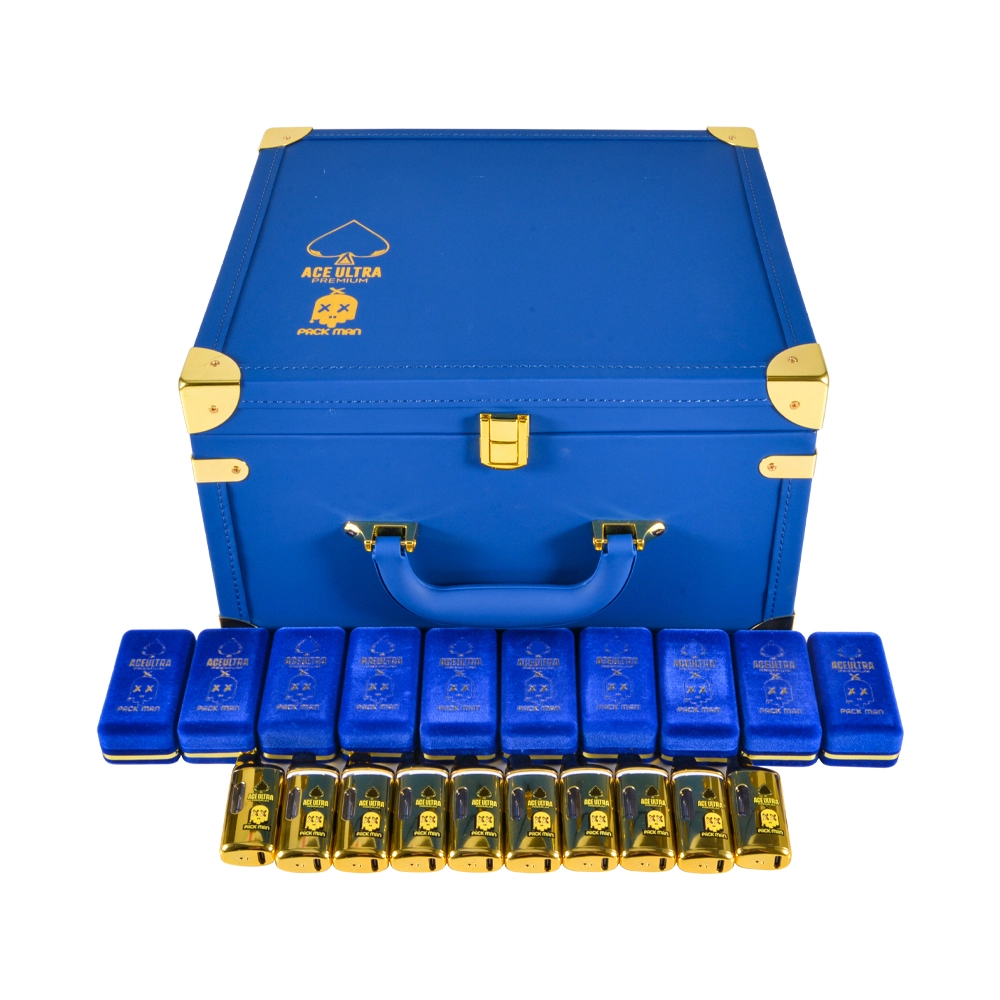
Why this deep-dive?
Thick oil magnifies small engineering choices. The ACE PACKMAN 2G is shortlisted because its intake geometry and seal discipline consistently limit leaks while maintaining first-puff quality. Here’s what to verify before a PO.
Intake System (built for viscous fills)
1) Port Area & Count
-
Target cumulative area near the equivalent of ~4×1.5–1.6 mm ports (or documented equivalent).
-
More area reduces starvation; too much invites flooding—match to your viscosity band.
2) Port Height & Channel Length
-
Raised ports keep floor sediment out and manage post-fill stability.
-
Short, smooth channels cut back-pressure, speeding soak/cure and improving first-minute success.
3) Flow Symmetry & Draw Feel
-
Left/right parity and correctly sized manifold yield a medium, low-turbulence draw.
-
Audible whistling or gurgle signals channeling or misaligned baffles—reject at PSI.
4) Preheat Logic (if present)
-
Gentle, timed preheat should clear condensation without scorching; request time/temperature parameters.
Ceramic & Output Control
-
Advanced ceramic centered at ~1.0 Ω distributes heat evenly; document tolerance and test across lots.
-
Output curve should be conservative enough to protect late-tank flavor while still finishing 2 g with ≤ 1 top-up (median).
The Seal Stack (where leaks actually start)
A) Gasket Compression
-
Ask for the compression window and how it’s measured; under- or over-compression both cause weep.
B) Ultrasonic Welds
-
Continuous, clean weld lines survive thermal cycling and vibration/drop during freight.
C) Mouthpiece Torque
-
A narrow, repeatable torque band is essential; loose = vapor path leaks, overtight = deformed seals.
D) Adhesives & Finishes
-
Coatings and label adhesives must pass environmental stress so warnings remain legible and seals stay put.
Pilot Targets (approve with numbers, not adjectives)
| KPI | Acceptance Band (2025 buyers) |
|---|---|
| Post-transit leaks (per 100) | ≤ 1.0 after cold↔heat + vibration/drop |
| First-10-puff success | ≥ 95% without coaching/preheat tricks |
| Runtime to near-empty | ≤ 1 recharge (median) |
| Week-one clog interventions | ≤ 2% |
| DOA/early failure | ≤ 0.5% |
Documentation to request (audit-speed)
-
Exploded views & dimensions: intake count/diameter/placement; resistance window; mouthpiece torque spec
-
Filling SOP: temp, safe-fill, headspace, soak/cure window
-
Device/battery safety statement + lithium transport test summary for the exact cell/pack
-
Assembled-unit materials/heavy-metal results for oil-contact parts
-
QC regimen: pressure/air-tightness on finished assemblies; thermal/vibration/drop; explicit AQLs; RMA/CAPA
-
Packaging map: fixed zones for warnings/serialization; ERP-ready barcodes
-
Change control: molds/BOM locked; golden samples retained; EOL notice policy
PSI & Incoming Inspection (catch drift before it ships)
-
Pull from transport-ready cartons, not showroom pieces.
-
Measure resistance (Ω), torque, draw feel, finish, and label placement to your AQL plan.
-
Photo-document weld lines and gasket seating for lot history.
Red Flags
-
Prefilled pitches or unclear rights to brand marks
-
No pressure-test method, no AQL numbers
-
Intake/finish/Ω drift between samples and pilot
-
Holiday skins that shrink warning text or hide serialization
Decision Frame
If the ACE PACKMAN 2G proves intake area matched to your viscosity, even ceramic heat, disciplined seals, and realistic USB-C runtime, you get a 2 g backbone that starts clean, finishes tanks, and keeps returns predictable—exactly what a mid-funnel approval needs.
Finally, if you wanna know more details about empty vapes wholesale, could go to these pages:Ace ultra packman 1g wholesale, Ace packman wholesale, ace packman dispo in bulk,ace packman dispo 2g in bulk, Ace packman 2 grams wholesale







0 Comments