
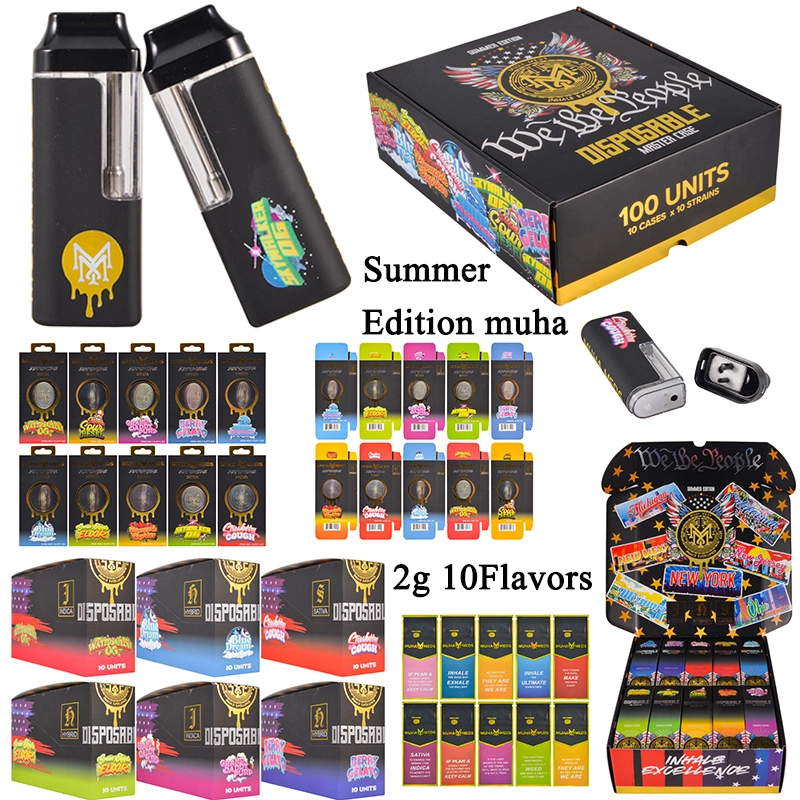
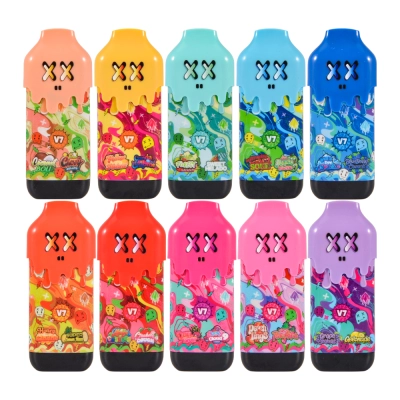
When you scale a Muha-style empty disposable program, the biggest friction point is often not the hardware itself, but the language around it. Engineers talk one way, sales another, and QC has its own vocabulary. A shared glossary turns that chaos into a playbook. This article builds a Muha empty disposables glossary—covering key terms from safe-fill to preheat—so B2B teams can spec, inspect, and reorder empty hardware with fewer misunderstandings.
1. Safe-Fill and Filling Geometry
Safe-Fill Window
A safe-fill window is the combination of visible space and internal geometry that makes it hard to overfill or mis-fill the device. For Muha empty disposables, a safe-fill design typically means:
-
Fill port diameter is large enough for thick liquids.
-
Internal volume is clearly defined so operators can see when they are near the limit.
-
When the mouthpiece or cap is installed, it does not displace so much volume that liquid is forced out.
If you buy empty hardware, define safe-fill in your spec sheet, not just in marketing copy.
Fill Port Diameter
The effective size (in millimeters) of the hole or slot where filling is done. Too small and you get back-pressure and bubbles; too large and you get mess, inconsistent headspace, and more operator error.
Anti-Backflow / Anti-Siphon Design
Internal channel shapes and seals that reduce the risk of liquid traveling backward under pressure, temperature shift, or altitude change. For B2B buyers, this matters for filled goods sitting in warehouses or shipping long distances.
2. Closures, Caps, and Torque
Snap-Fit Mouthpiece
A mouthpiece that pushes onto the body and locks with mechanical interference. Key points:
-
Insertion force range (too low = loose; too high = cracked parts).
-
Visual “fully seated” reference line.
-
Policy on removability (can it be safely removed after capping, or is that considered tampering?).
Threaded Mouthpiece
A cap that screws onto the body. Here the important concept is the torque band:
-
Below the torque band: increased risk of leaks and loosening in transit.
-
Above the torque band: increased risk of stress cracks, stripped threads, or deformation.
Tamper-Evident Feature
Any ring, bridge, or perforation designed to break on first opening. Decide where you want tamper evidence: on the device, on the inner pouch, on the outer box, or a combination.
3. Airflow, Coil, and Preheat
Ohm Range / Coil Resistance Band
The target resistance of the heating element (for example, 1.2–1.6 ohms) plus an acceptable tolerance. If the range is too wide, preheat and draw performance become unpredictable; if the range is tight and enforced, batches behave more consistently for your clients.
Airflow Band
A defined range of draw tightness considered acceptable. Rather than saying “this one feels tight,” you specify what “normal” means, then reject outliers. Even a simple bench test—fixed suction and relative comparison—can help your QC team classify airflow consistently.
Draw Activation Threshold
The negative pressure required to trigger the device. If your Muha-style disposable uses draw activation, the threshold should be high enough to avoid unintended firing, but low enough that users are not forced to pull uncomfortably hard.
Preheat (Hardware Side)
A controlled low-power pulse designed to gently warm the coil before normal use. For empty hardware, preheat is strictly an electronics and control feature—not a property of any oil or formulation. A good spec mentions:
-
Preheat duration.
-
Typical voltage or current range.
-
Built-in safeguards that prevent overheating in a dry state.
4. Compliance and Materials Language
Restricted Substances (RoHS-Style Thinking)
For empty disposables that contain electronics, B2B buyers increasingly use “RoHS-style” language to describe expectations for heavy metals and certain flame retardants. Even without formal certification, you can require that materials respect known industry limits for problematic substances.
SVHC / High-Concern Chemicals
The phrase “substances of very high concern” is often used to describe chemical families that are flagged for long-term health or environmental risks. In a Muha empty pod context, typical focus areas are plastics, elastomers, coatings, and inks.
PFAS and Fluorinated Chemistries
PFAS (often called “forever chemicals”) are under sustained regulatory and consumer scrutiny. If your mouthpieces, seals, or coatings rely on fluorinated materials, your glossary and specs should reflect how these are being monitored or phased down over time.
5. Sampling, AQL, and Defects
AQL (Acceptable Quality Limit)
The maximum defect rate you are prepared to accept for a given category (critical, major, minor) in incoming inspection. It is not the “guaranteed” defect rate in the population—it is a control setting for accept/reject decisions on lots.
Critical / Major / Minor Defects
-
Critical: potentially unsafe or non-compliant.
-
Major: unacceptable to most customers in normal use.
-
Minor: small deviations that do not affect function and are often tolerated.
Sampling Plan
The rule set that defines how many pieces you inspect and how many defects you allow before rejecting a lot. A consistent sampling plan keeps decisions repeatable even when inspectors change.
6. Packaging and Traceability Terms
Lot Code / Batch Code
A structured identifier printed on pods, trays, or cartons so issues can be traced to specific production runs. Without stable lot coding, RMA and CAPA work becomes almost impossible.
Date Code
Production or packing date in a standardized format. Helpful for shelf-life studies, complaint analysis, and inventory rotation.
2D Code (QR / Data Matrix) for Hardware
A machine-readable code that can encode batch and model information and be scanned at receiving, during QC, or at retail for authenticity checks.
A shared glossary for Muha empty disposables does more than make meetings sound smarter. It reduces friction between teams, cleans up RFQs and POs, and helps you transform fuzzy words like “safe-fill” or “premium preheat” into concrete, testable expectations that drive better hardware and fewer surprises.





0 Comments