
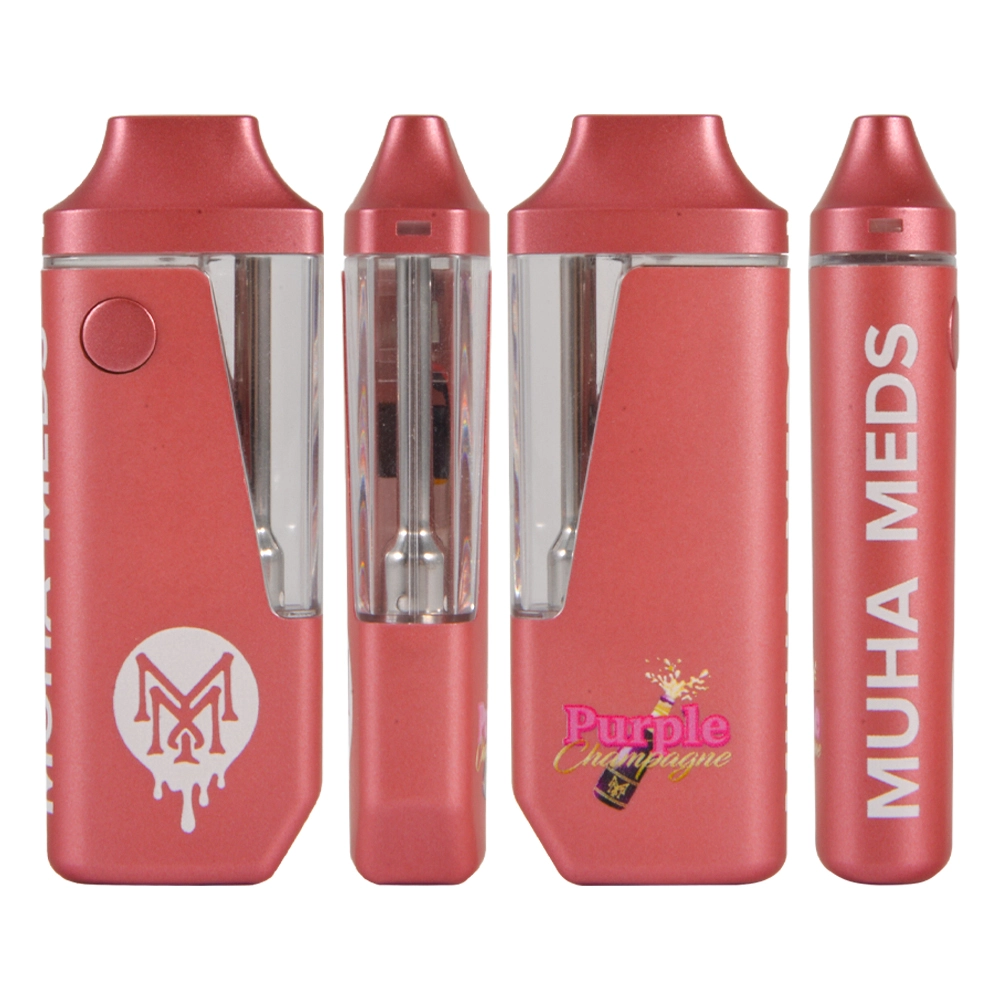
When you choose a Muha-style 2G empty disposable as your main chassis, you are not just picking a nice-looking shell. You are freezing a platform that your filling SOPs, regulatory filings, and customer promises will depend on for a year or more. If the hardware in month-12 is not functionally identical to what you approved in month-1, your team pays for it in leaks, inconsistent draw, and constant troubleshooting.
That is why spec freeze and change control are not “nice to have” for Muha 2G programs – they are the backbone of your risk management.
Why “Month-12 = Month-1” Matters
For a Muha-style 2G chassis, keeping month-12 equal to month-1 protects four areas:
-
Regulatory stability – Once you notify regulators or customers that a device has a certain tank volume, safety profile, and materials, silent changes can turn those filings into liabilities. Many markets cap tank size, expect child-resistant features, and assume the device design remains stable.
-
Filling process – Your line settings (temperature, viscosity window, soak time, preheat) are tuned to a specific coil resistance, intake geometry, and chamber volume. If those drift, your “good recipe” suddenly produces dry hits, floods, or leaks.
-
Quality planning – Your AQL and sampling plans are based on historical defect rates for a fixed design. If the design changes without notice, your statistics stop meaning anything and bad lots slip through.
-
B2B trust – Retail and brand clients expect that a “Muha 2G shell” they reorder later in the year behaves like the sample they validated at the beginning.
A spec freeze does not block improvement; it simply demands that every change is visible, evaluated, and approved before it hits production.
What Belongs in a Muha 2G Spec Freeze?
A serious Muha 2G spec freeze should cover at least three layers of detail.
1. Mechanical spec
-
Overall length, width, thickness, and mouthpiece dimensions with tolerances
-
Chamber volume per side and wall thickness
-
Intake hole count, diameter, and exact position relative to coil
-
Mouthpiece, cap, and seal geometry, including O-rings and gaskets
-
Materials for housing, tank, seals, filters, and adhesives
2. Electrical and thermal spec
-
Battery chemistry, nominal capacity, and internal resistance band
-
Coil resistance range and maximum allowed variation
-
Designed power envelope and temperature limits for the heater
-
Protection features for over-current, short circuit, over-charge, and over-discharge, aligned with current best practice for vape electrical safety
3. Packaging and identification
-
Tray or blister design, number of units per inner box, carton strength
-
Marked fields for batch ID, production date, capacity class, and safety symbols
-
Baseline transit performance under realistic vibration and drop conditions
If any of these elements change, you are dealing with a different device, even if the outside looks the same.
Designing a Change-Control Workflow
Change control does not have to be heavy or slow, but it must be explicit. A simple workflow looks like this:
-
Change request – Supplier or internal engineering raises a documented proposal (for example, new gasket material, modified intake size, updated cell).
-
Impact review – Filling, QC, regulatory, and product teams assess what the change touches: tank volume, safety, runtime, flavor delivery, labelling, or shipping.
-
Sample build and testing – Engineering samples are built against the proposal. You verify dimensions, coil resistance, leak performance, thermal behavior, and basic safety.
-
Pilot lot – A limited lot is run under a unique revision code. It is monitored for field defects, runtime, and complaints before any scale-up.
-
Formal approval – Only after sign-off do you merge the change into normal production, with a clear revision label and effective date.
Everything should be captured in a simple change-notice document so you can look back and know when and why a revision happened.
Golden Samples and Reference Sets
For Muha 2G programs, golden samples are your anchor:
-
At least one set stays in your controlled storage.
-
One set stays on the supplier’s QA side.
-
Optionally, a third set sits with an independent lab or external QA partner.
Each golden sample should be tagged with revision, date, and inspection results. When somebody says “this lot feels tighter” or “draw is weaker,” both sides can compare against the same physical reference instead of arguing.
Supplier Obligations You Should Lock In
Your supply agreement should make change control non-negotiable. At minimum:
-
No change to materials, tooling, battery, or electronics without written approval.
-
Changes that touch the wetted path, coil, or cell must go through a full change-control cycle with new golden samples.
-
Updated drawings, spec sheets, and safety documentation are issued whenever a revision is accepted.
-
Changes are not introduced in the middle of peak season unless you trigger them.
Without those obligations, your “Muha 2G platform” quickly becomes a series of undocumented experiments.
Conclusion: Spec Freeze as a Sales Argument
When done properly, spec freeze and change control are not just internal QA tools. They become a selling point:
-
You can tell buyers your Muha-style 2G shells run on a frozen spec with documented revisions.
-
You can prove that the chassis they validate this quarter will still match their tests at the end of the year.
-
You can show that any change goes through golden samples, pilot lots, and formal approval.
In a market where regulators, retailers, and end-users all demand consistency, “Month-12 = Month-1” is one of the clearest ways to differentiate a serious 2G hardware program from a short-term commodity buy.



0 Comments